

About
this course
General Description
This intensive four-week course in Figurative Sculpture welcomes beginning, intermediate, and advanced students who wish to develop their knowledge and practical skills in the study of the human form through traditional academic sculptural techniques. The course is designed to provide a structured and comprehensive understanding of human anatomy, proportion, and the construction of the figure, following a clearly defined process that guides students through each stage of sculptural practice.
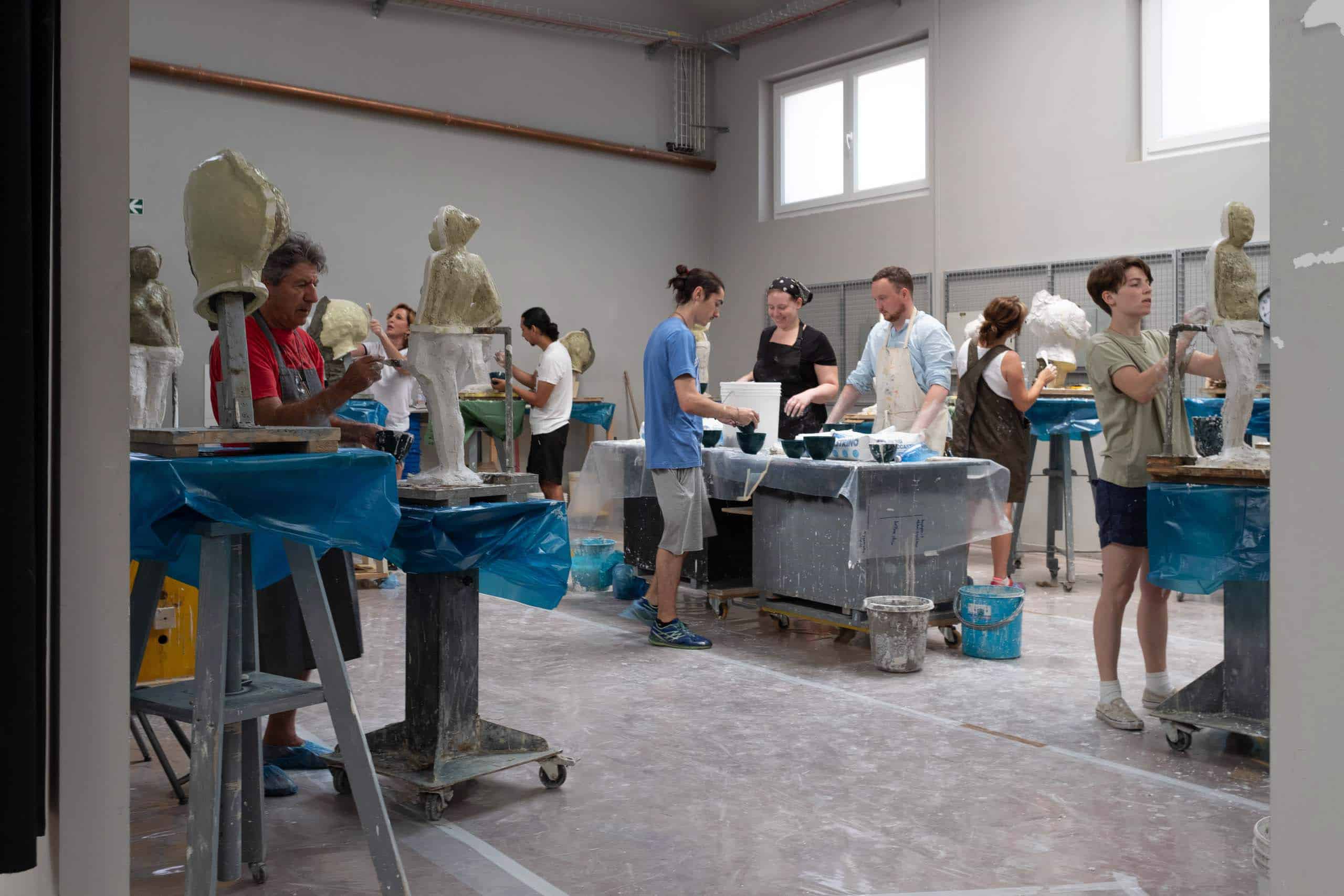
The course combines demonstrations, anatomical study, and studio practice, with instruction focused on a shared sequence of exercises and techniques. All students progress through the same program, building a solid foundation in the principles of figurative sculpture.
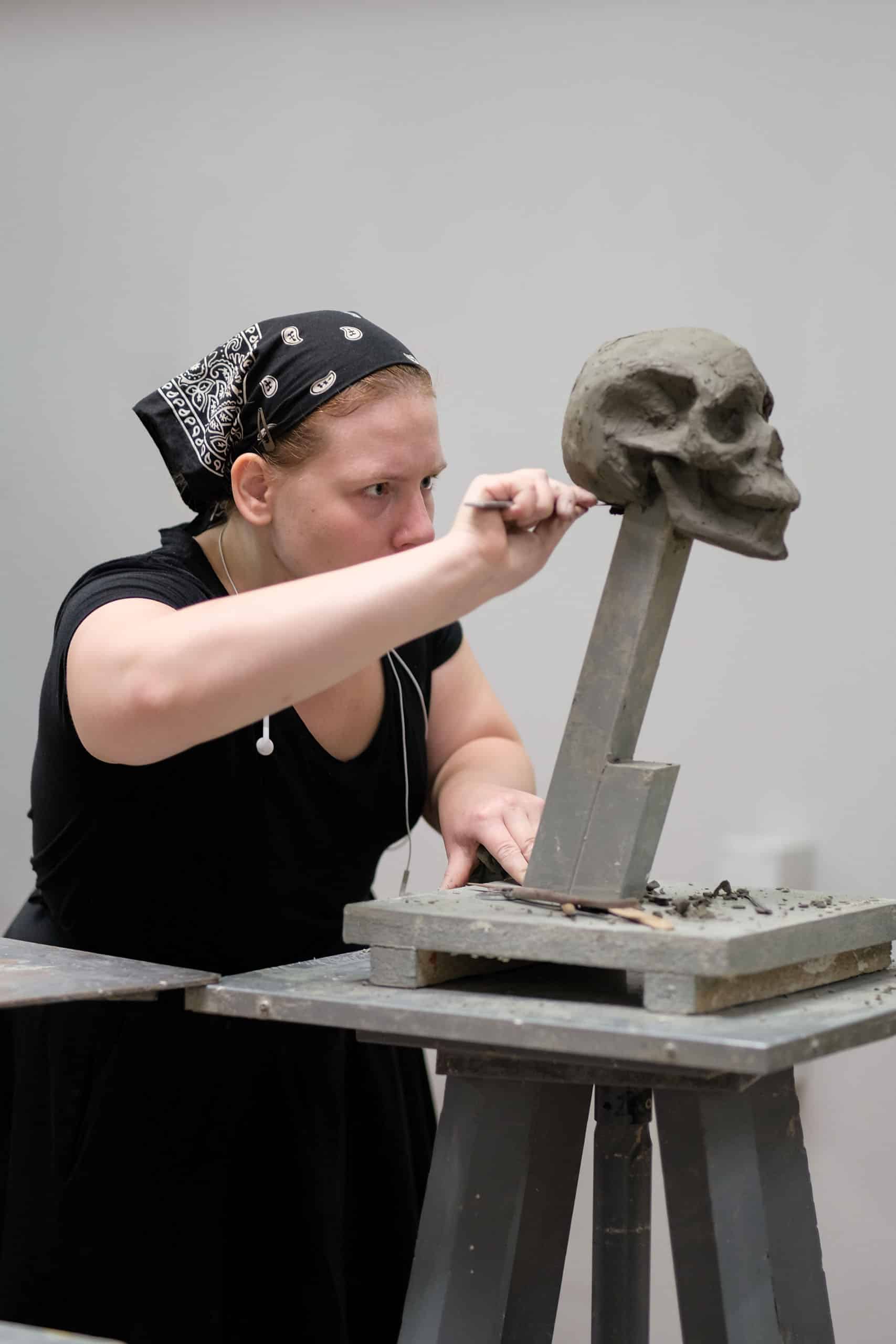
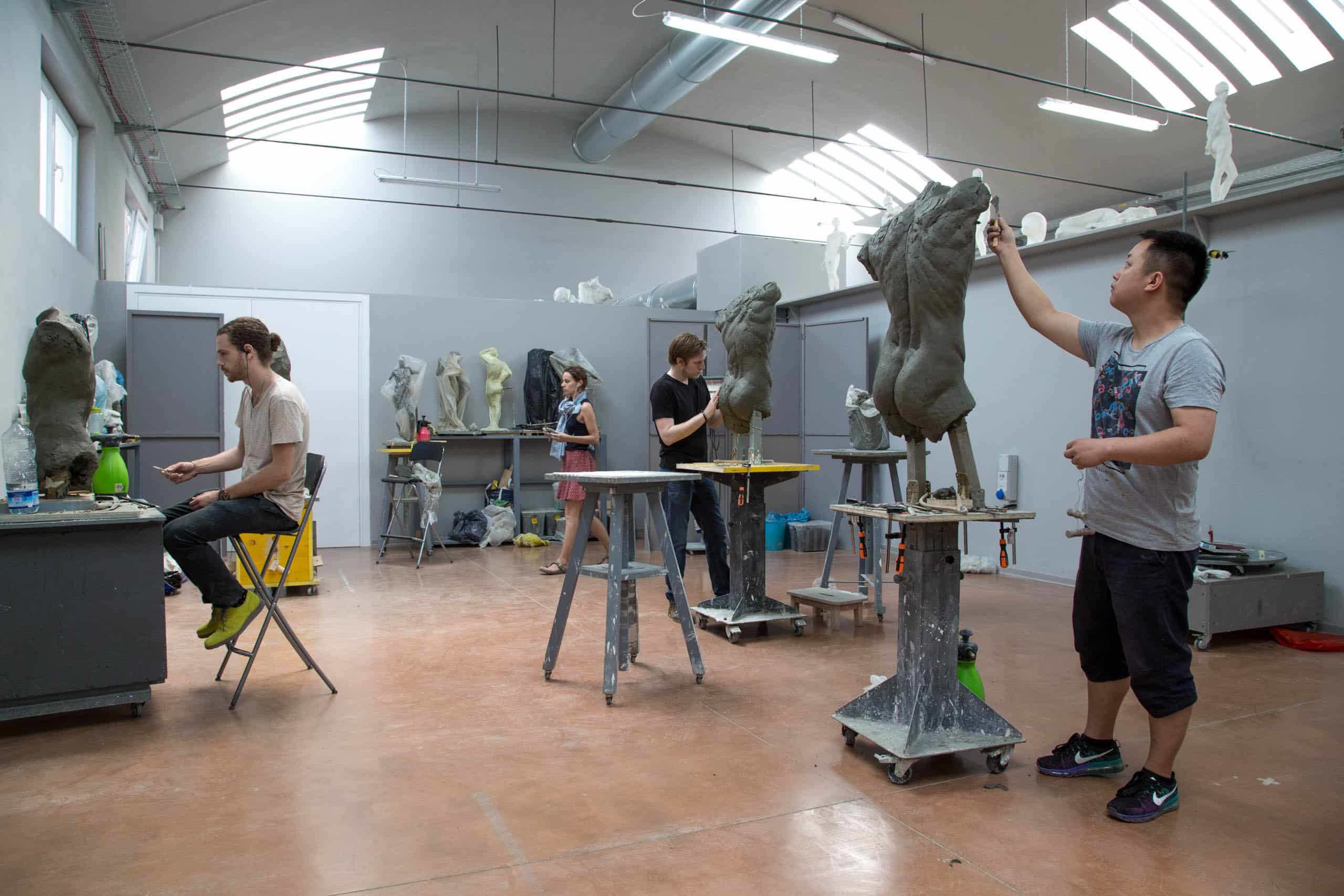
Students develop two parallel sculptural studies, working from life throughout the course. Mornings are dedicated to sculpting a life-size portrait, with the first week devoted to an intensive study of the human head and its underlying anatomical structure. Students begin by constructing a human skull in clay, examining its proportions, planes, volumes, and structural relationships. This exercise establishes an essential understanding of the anatomy of the head and provides the foundation for the portrait work that follows.
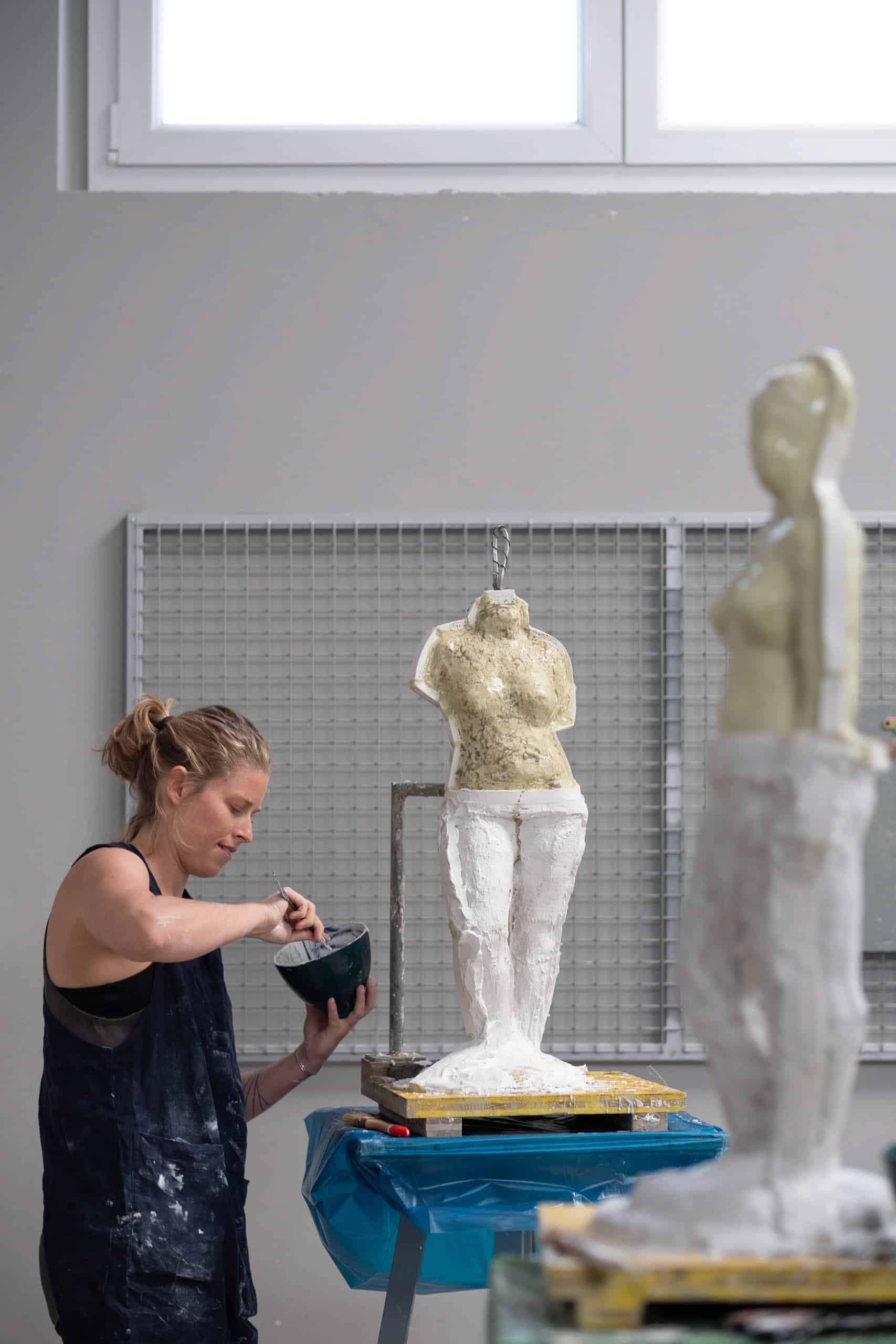
Afternoons focus on sculpting a half-life-size figure, exploring the proportions, anatomy, balance, and overall structure of the human body. Working simultaneously on these two projects allows students to develop a complementary understanding of the human form, from the specific anatomical structures of the head to the proportions and organization of the body as a whole. Particular attention is given to direct observation, anatomical accuracy, and the translation of the living model into a convincing three-dimensional sculptural form.
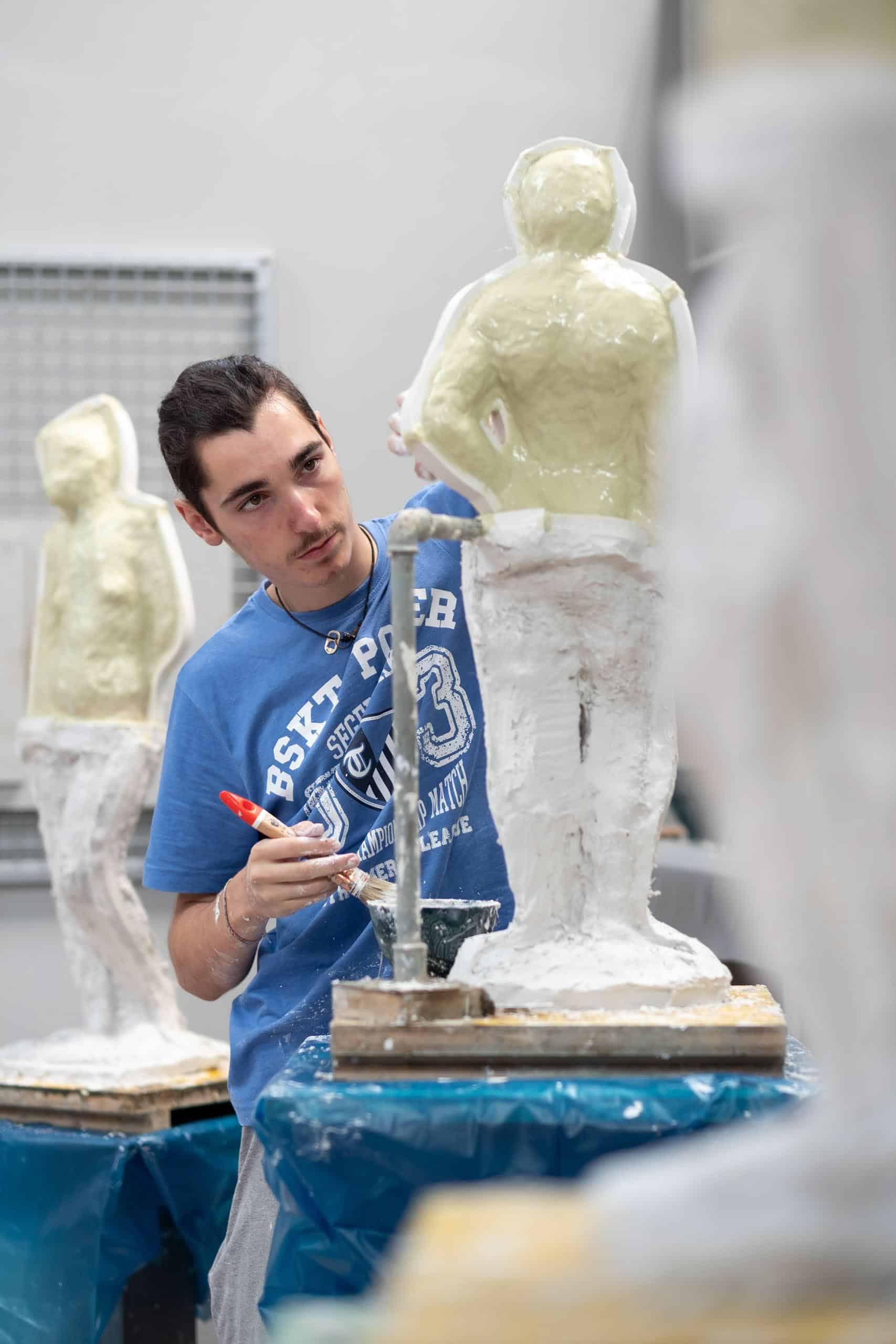
During the fourth week, students are introduced to the fundamental principles and techniques of mold-making and casting, working with silicone and plaster. They learn the practical stages involved in preparing, making, and using molds to reproduce their sculptures. Each student completes the course by casting both their portrait and their figure, gaining hands-on experience in two distinct casting projects and in the processes involved in preserving and reproducing their work.
By the end of the program, students will have gained a deeper understanding of human anatomy and figurative sculpture, developed essential observational and modeling skills, and acquired practical knowledge of mold-making and casting. The course offers a systematic, hands-on introduction to the complete process of figurative sculpture, from the study of gesture, anatomy, and proportions to the final casting of two finished works.
Maximum enrollment: 24 students.
Additional Info
METHODOLOGY IN CLASS:
Please note that the methodology we teach asks students to stand or be mobile for long periods, potentially 3 to 6 hours per day, depending on the course or workshop. This is integral to our approach and is key to gaining the most out of the learning experience; students move between their easels or sculptures to view the subject from a distance, then return to apply their work.
WORKSHOP CREDITS: 6 per session
Workshop coursework is expressed in terms of completed hours of study, with 1 credit equivalent to 20 hours of completed study. This provides students with a way to document the amount of study they have completed, which may be useful for professional development or, where applicable, when demonstrating prior study to another institution. Academic grades or credits are not awarded, and there are no exams. Please see each course for total hours of study. Any final acceptance or recognition of hours of study or credits for a workshop (external activity) is at the discretion of the Home University or institution in question and in accordance with each institution’s transfer policy.
Medium & Materials
Water-based clay
Plaster
Students will find all materials ready for use on the first day of class. If they wish to purchase any additional materials for the course, the Florentine art supply store, Zecchi, offers FAA workshop students discounted art supplies.
What’s Included
- All materials and tools (students may bring their own wood modeling tools)
- 120 hours of instruction in English
- Individual critiques
- Welcome Party in the gardens of the Budini Gattai Palace in Florence on the first Thursday of the workshop, to meet fellow students and faculty
- Summer Faculty Exhibition to view the latest work by FAA faculty
- Access to the on-campus FAA Café, where students may purchase breakfast, lunch, and enjoy an afternoon aperitivo
- List of housing recommendations
Faculty
Mitch Shea, Director.
Mitch Shea is an American sculptor and draftsman born in Augusta, Georgia, in 1987. He attended the Academy of Art University in San Francisco, California, from 2007-2010, where he studied Illustration and Metalworking, and worked on a variety of public monuments in the Bay Area. In 2011, he relocated to Florence, Italy, and began studying Sculpture and Drawing at The Florence Academy of Art.
During his study, he was awarded numerous accolades and, as a student, began teaching in 2013. Mitch is now Director of the Sculpture Program at The Florence Academy of Art. He also holds regular artist residencies in Greece and Cyprus. His works accommodate a multitude of priorities; namely, a deep commitment to observing and engaging a subject in order to produce works that contain some of the gravity and physicality of the natural world. He is keen to work in environments that are composed of striations of historical epochs that draw from both Eastern and Western cultural milieus. His work may be found in private collections throughout the United States, Europe, and the Middle East.
See more of Mitch’s work at www.mitchshea.com and @mitchshea
Eirik Arnesen (b. 1990), from Norway, received his education in the figurative arts at The Florence Academy of Art in Florence, Italy, where he studied sculpture under Robert Bodem. His focus is on the human body, and his goal is to produce carefully thought-out works with solid construction and organic naturalism in order to create convincing images of the human body in accordance with the realist tradition.
Eirik is currently Principal Instructor of Sculpture at The Florence Academy of Art.
See more of Eirik’s work at www.eirikarnesen.com and @eirik_arnesen_art
Bertrand Godefroy, a sculptor and draftsman from France, discovered academic drawing at a young age while living in Switzerland. He then continued his artistic education at École Émile Cohl in Lyon, where he graduated and received his bachelor’s degree in draftsmanship. During these studies, he discovered sculpture, which quickly became his primary interest. He pursued an internship at the renowned Atelier Prométhée, a mold-making and casting atelier in Paris. After this experience, it became clear that becoming a sculptor was Bertrand’s dream.
Subsequently, he enrolled in the sculpture program at The Florence Academy of Art, from which he graduated. Currently, he serves as a Principal Instructor at the academy. In addition to his teaching, Bertrand also operates his private studio, Corpo, located in the heart of Florence.
See more of Bertrand’s work at @bertrandgodefroy
Anna-Lena Cäcilia Ledl (b. 1997) grew up near Hallein, an Austrian city in the foothills of the Alps with a long tradition of wood-carving sculpture. There, Anna-Lena began training in sculpture at just 14 years old, studying under Josef Zenzmaier and later Johanna Schwaiger. She has collaborated with local art platforms in Hallein, such as the Galerie Schloss Wiespach residency, where she has worked with internationally renowned artists like Grzegorz Gwiazda.
In 2016, Anna-Lena moved to Italy to undertake a three-year academic program in figurative sculpture at the Florence Academy of Art. Already in her second year, she was awarded both the “Best Sculpture of the Year” and “Best Drawing of the Year” prizes. Her work has been internationally recognized by organizations including the Art Renewal Centre (ARC) and The International Arts and Culture Group (TIAC). Her pieces are part of private collections in Europe, North America, and South Africa.
See more of Anna-Lena’s work at @annalena_caecilia
Thor Larsen is a sculptor from Copenhagen, Denmark. He received his education at the renowned Rudolf Steiner School (1992-2004). After graduating from there, and following his passion for art, Larsen enrolled in the basic course for training to be a goldsmith at KTS (2004-2005), and later attended EUC to become a stone mason (2005-2009), graduating with a bronze medal. The search for academic sculpture brought Larsen to Florence, Italy, where he attended The Florence Academy of Art, graduating from the Sculpture Program in 2013. Larsen currently works from his private studio in Florence and is a Principal Instructor in the Sculpture Program.
See more of Thor’s work in the Alumni Gallery and at www.thorlarsen.net and @thor_sculp_thor
Location
ADDRESS: Via Aretina 293, Florence, Italy