


Sculpture
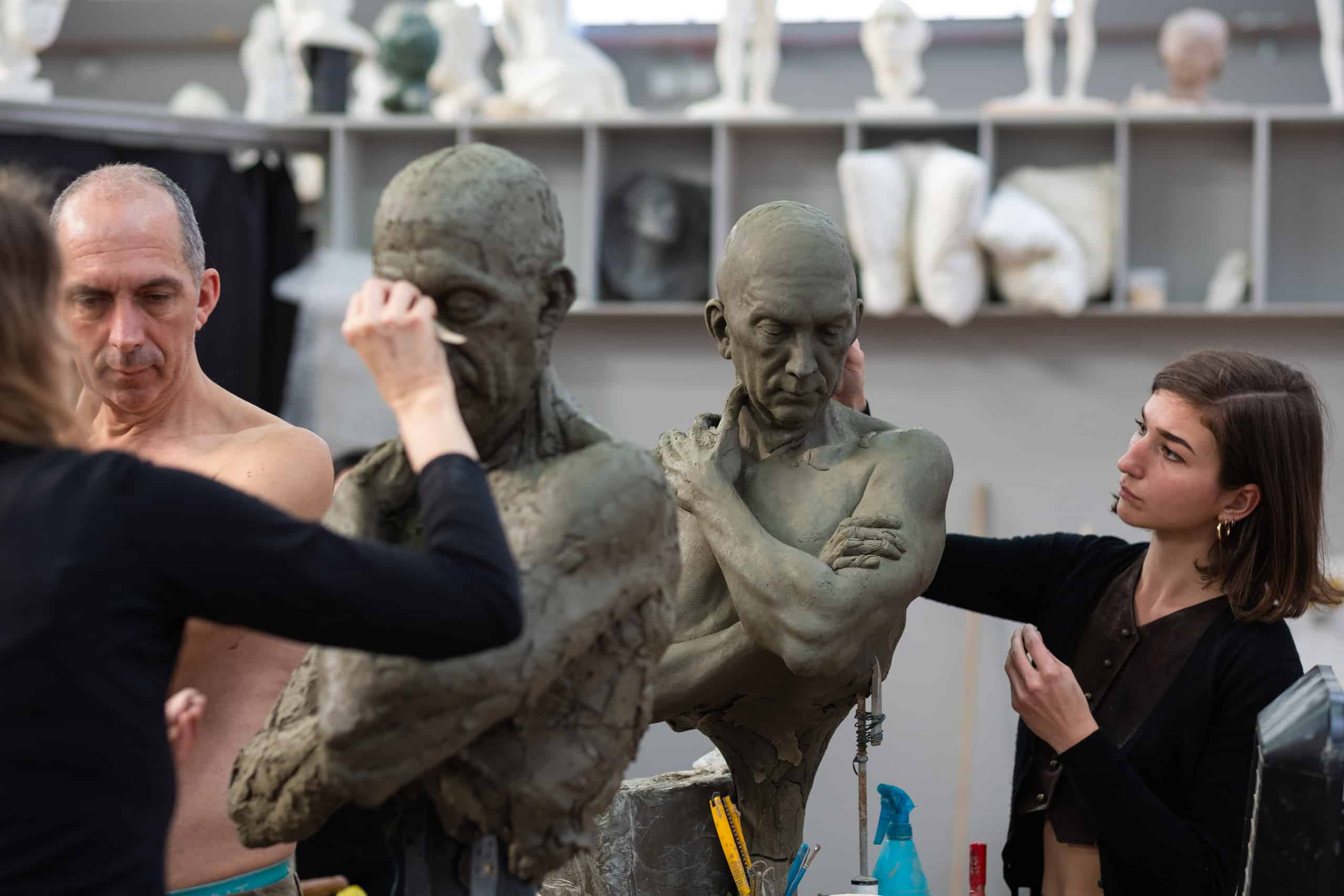
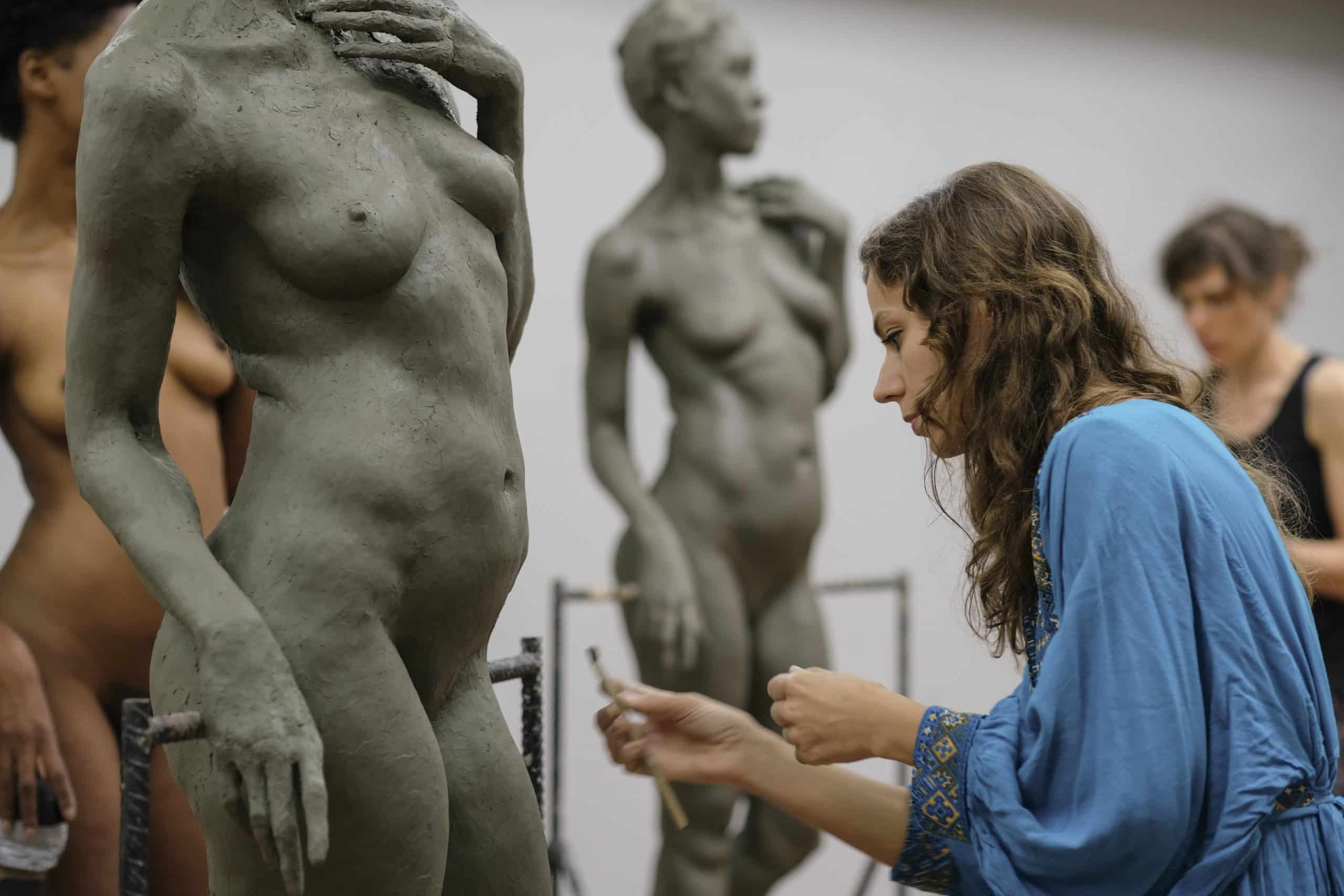
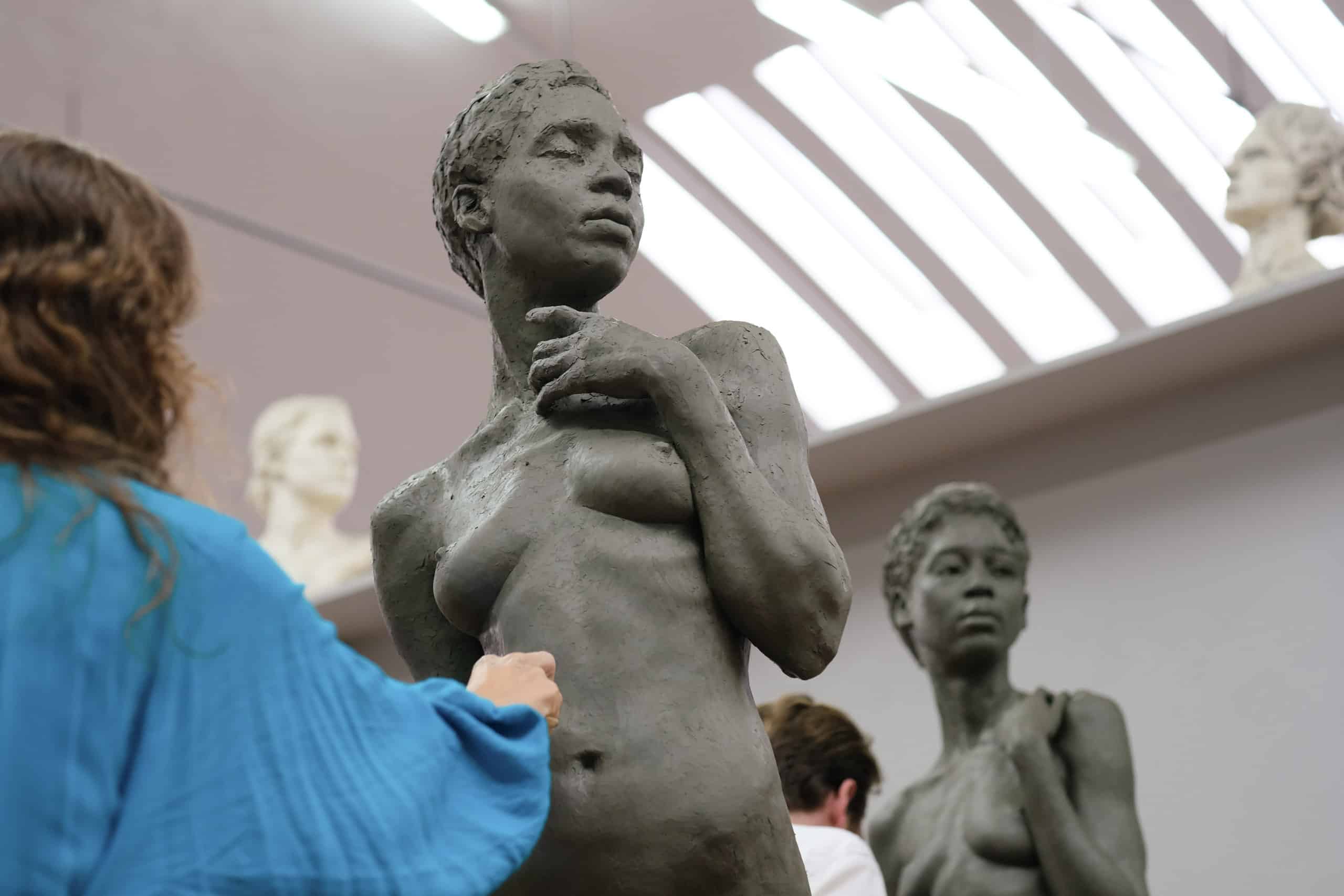
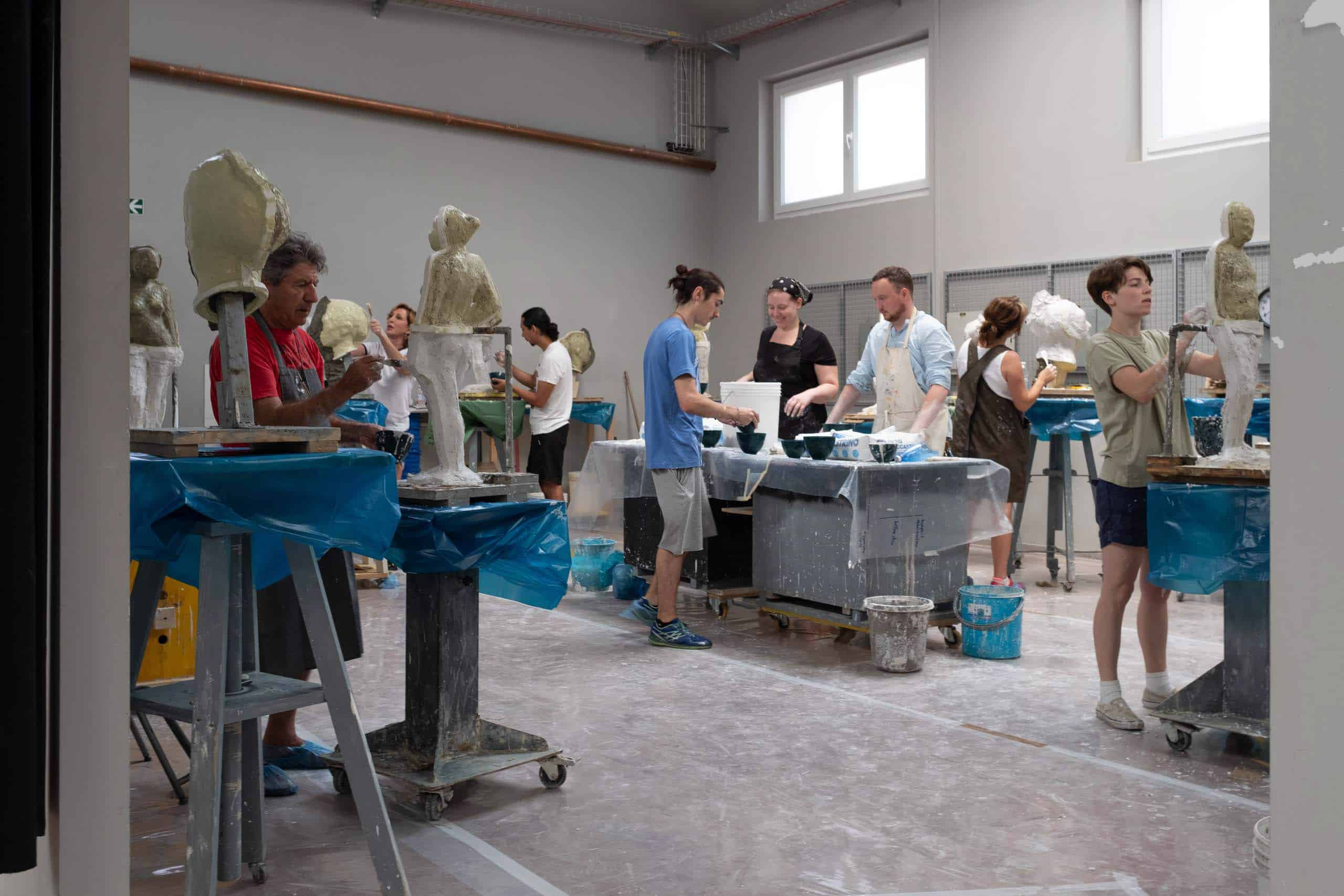
The Sculpture Program is full time and requires three years to complete. Students work daily from the figure or portrait, while attending lectures in Anatomy and Art History. Their faculty are graduates of the program, and versed in the method, philosophy and language of instruction of The Florence Academy of Art.
The Sculpture Program is offered in Florence, Italy.

About
the Program
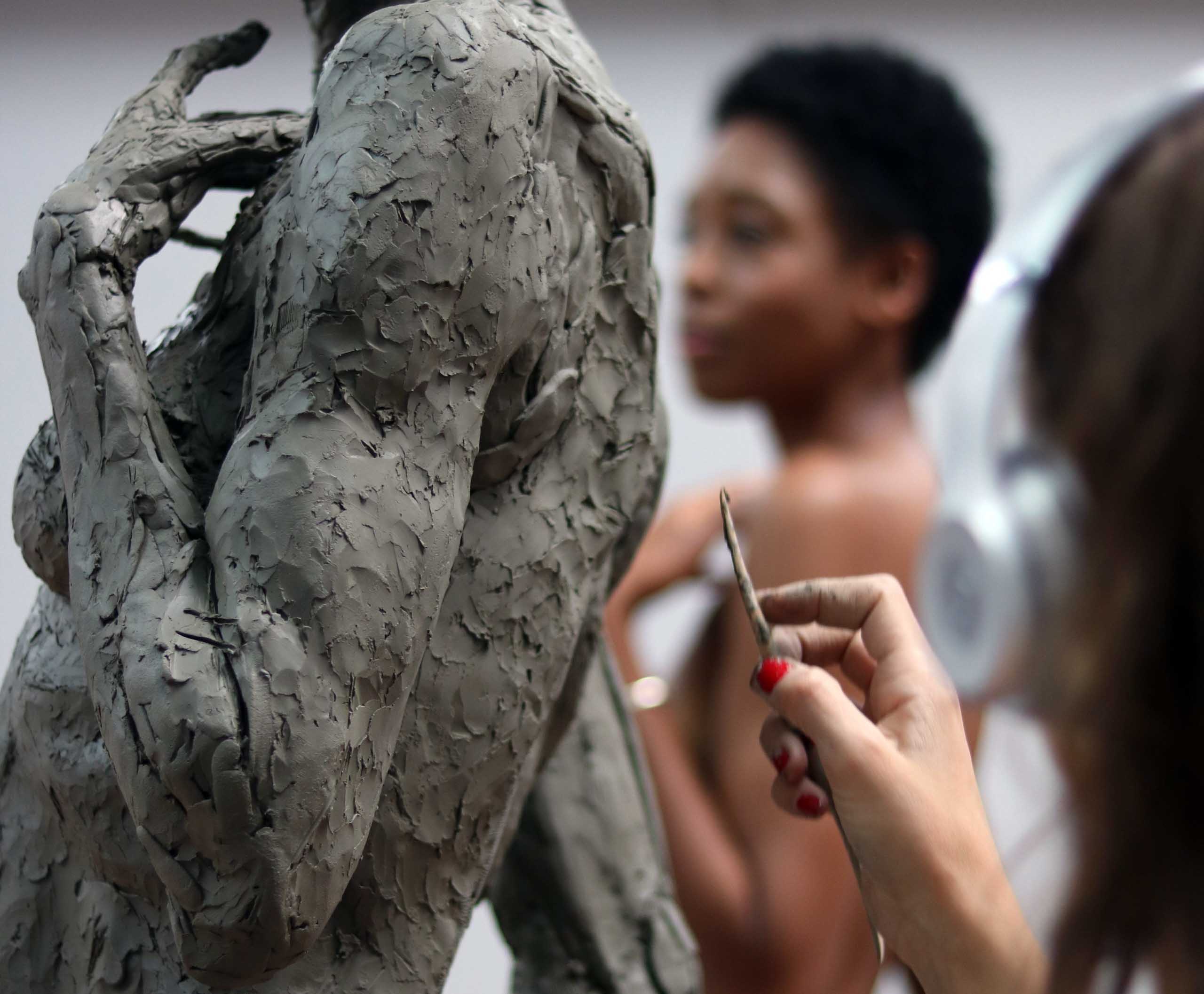
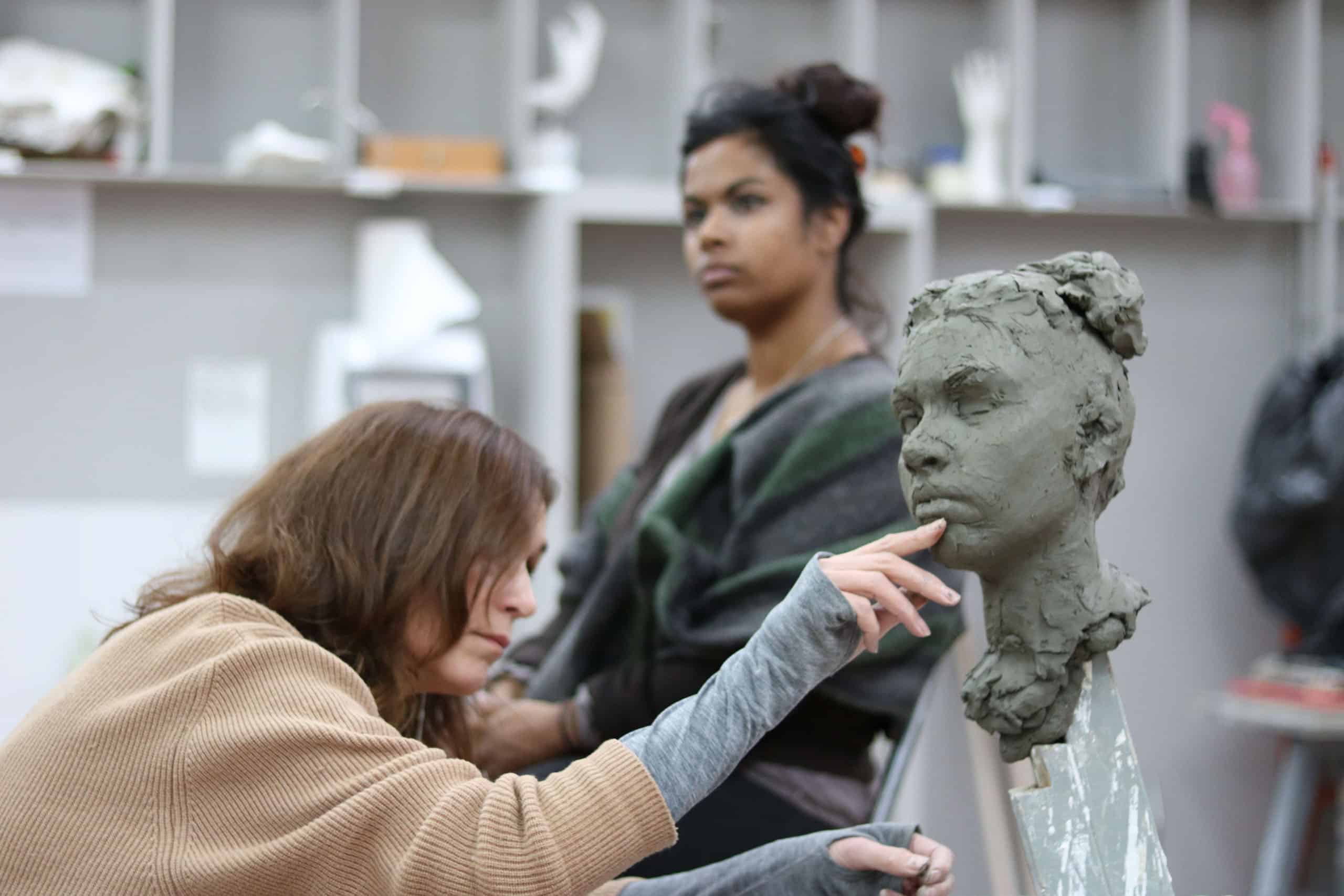
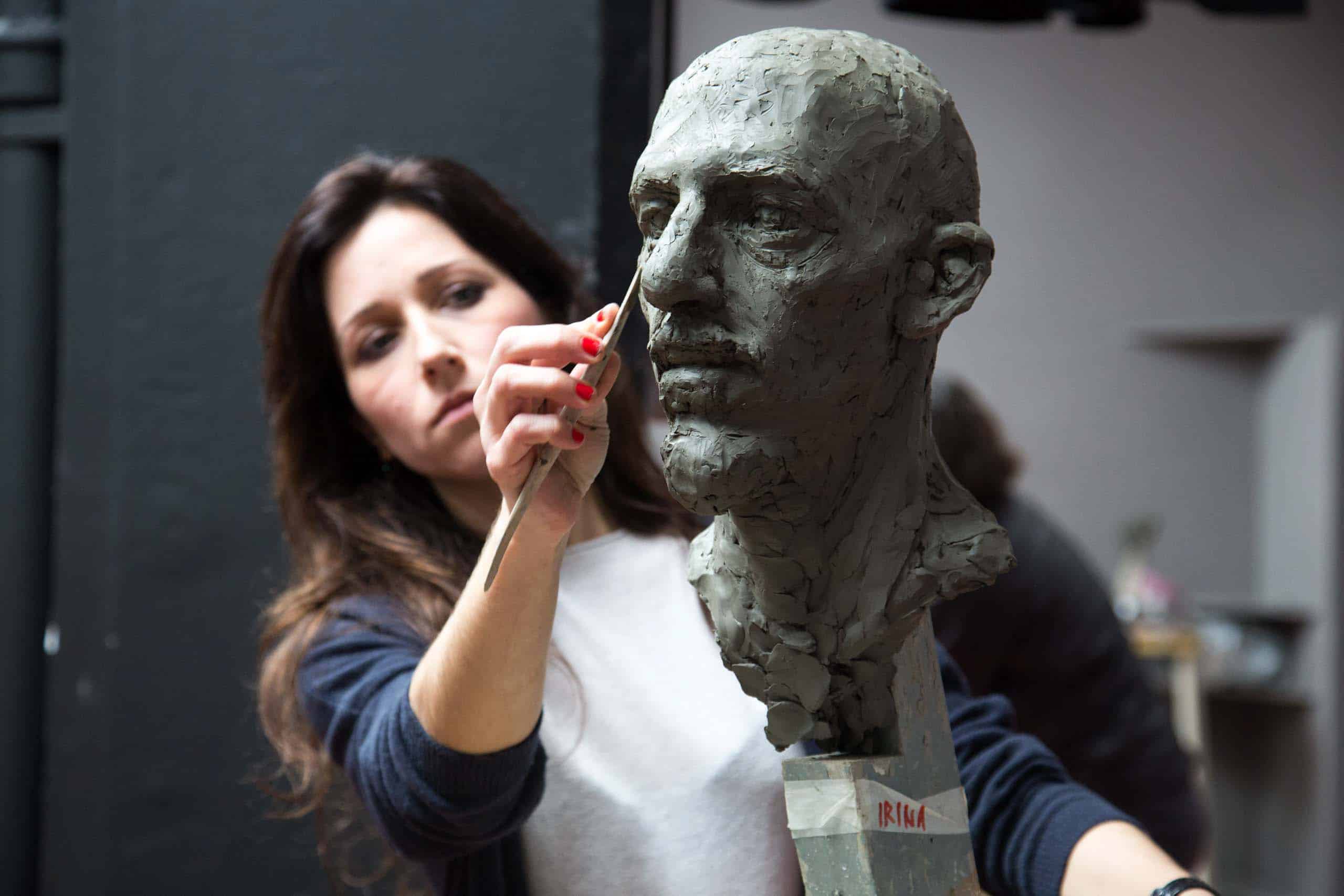
Sculpture is offered in Florence. Our program provides a strong foundation in sculpture by focusing on the development of primary craft skills. In order to understand the complexities of form in space, the program emphasizes the use of observation and structural knowledge to develop a capacity for visual judgment and visual accuracy. Students are taught not to stray towards mannerism. Also central to the program is teaching students to be self-critical.
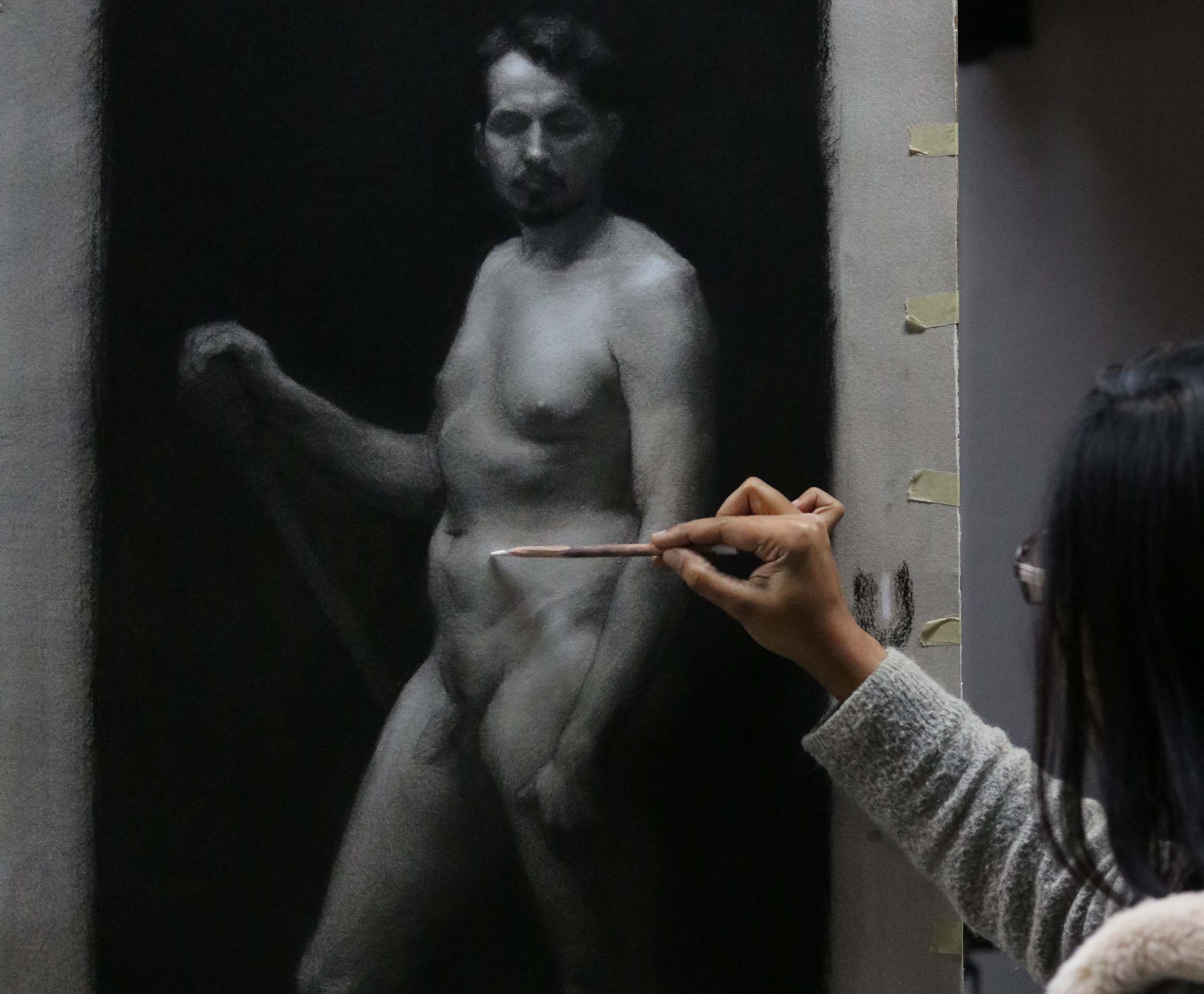
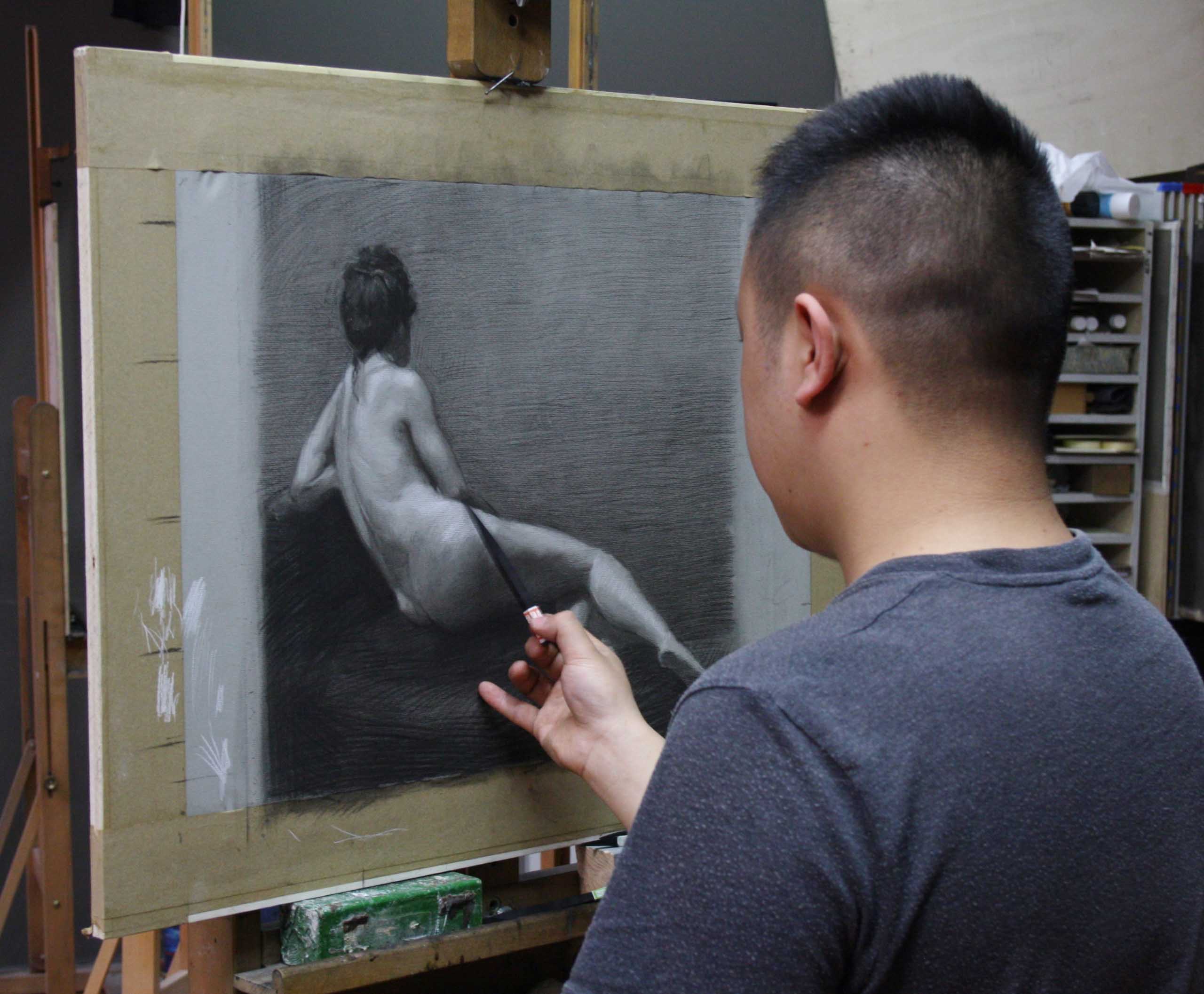
The program is broken down into lessons in sculpture and lessons in drawing. Drawing is considered a fundamental skill for sculptors; when students are able to achieve an accurate rendering in 2 dimensions they can apply this knowledge to the more complex task of observing and rendering a sculpture with its multiple viewpoints. Students therefore will spend three hours five days a week drawing the live figure in charcoal. They will also have two hours one evening a week when they will draw the live figure in pencil. Students learn to draw on a light background to concentrate on line and emphasize the total silhouette. Precision of this outline is crucial for accuracy, as comprehending the figure’s geometry by locating and connecting the bony points will help the sculptor find and explain specific forms in clay.
1st year
Beginning Sculpture
“We sculptors have a greater goal: to develop an aesthetic vocabulary to fully express one’s ideas as they develop in one’s work.” – Robert Bodem, Former Director Sculpture Program
Beginning Sculpture
1st year | 22.5 credits
Students learn to focus at the start of a project on those essential elements that allow then to obtain a likeness in pose and structure of their subject.
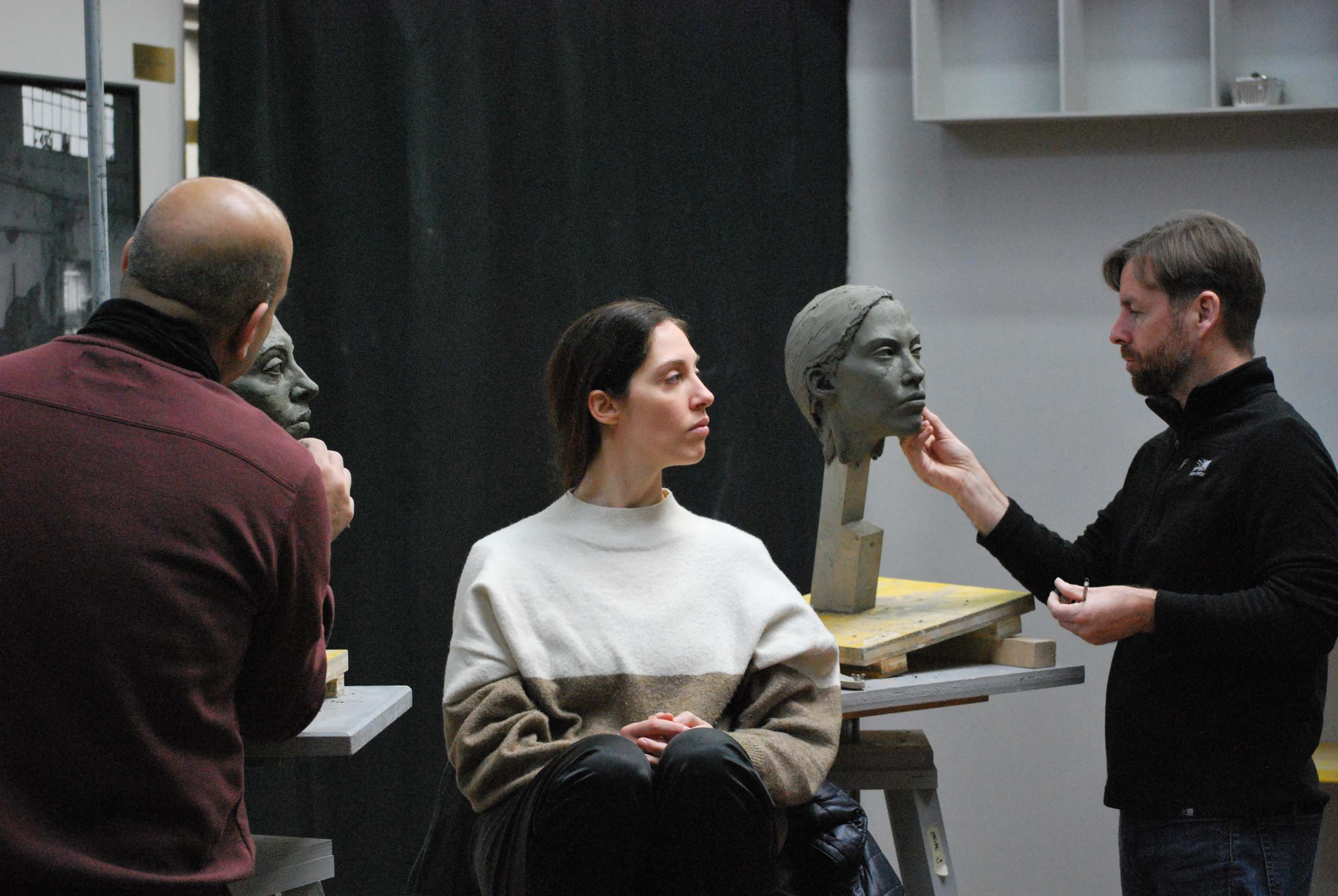
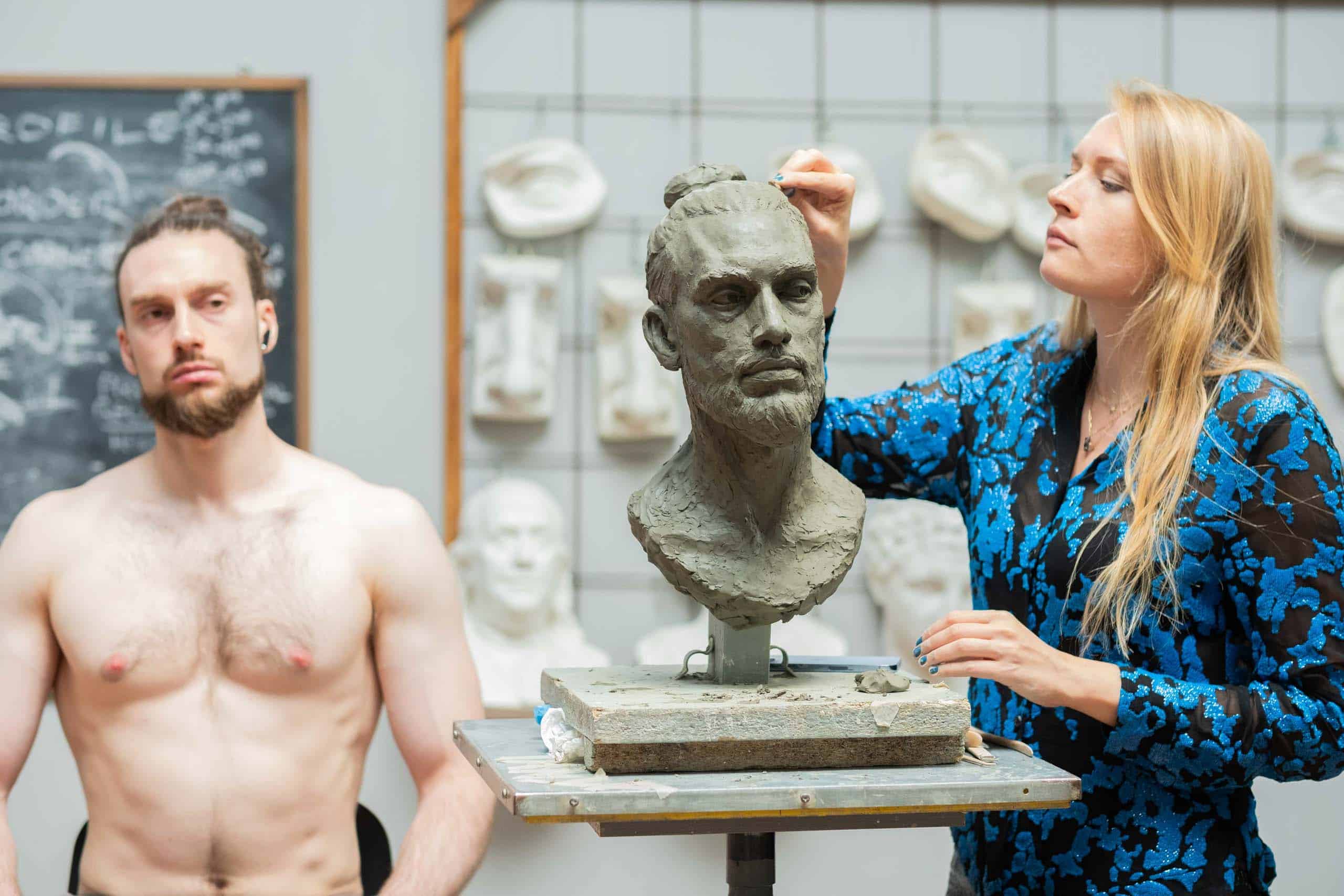
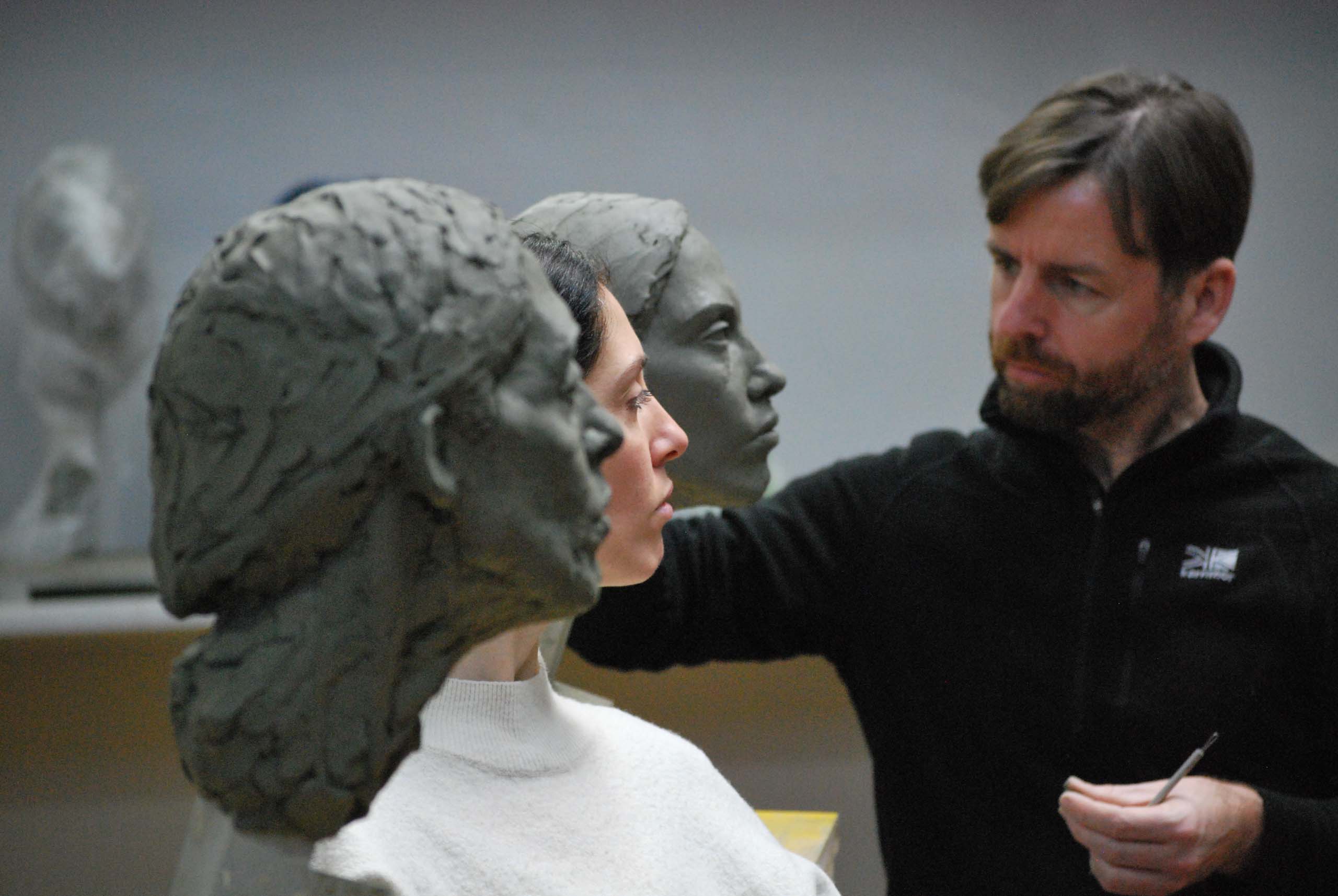
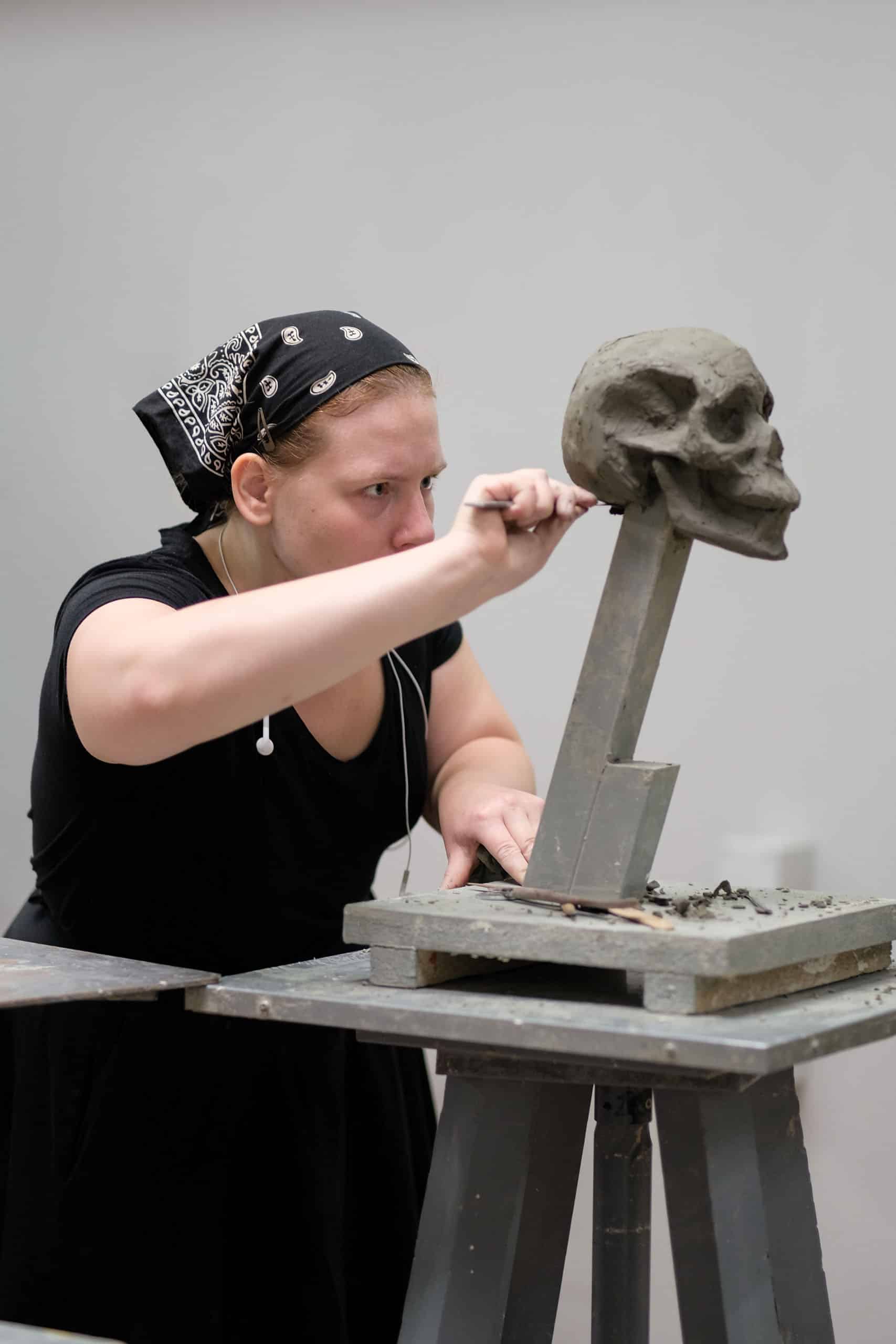
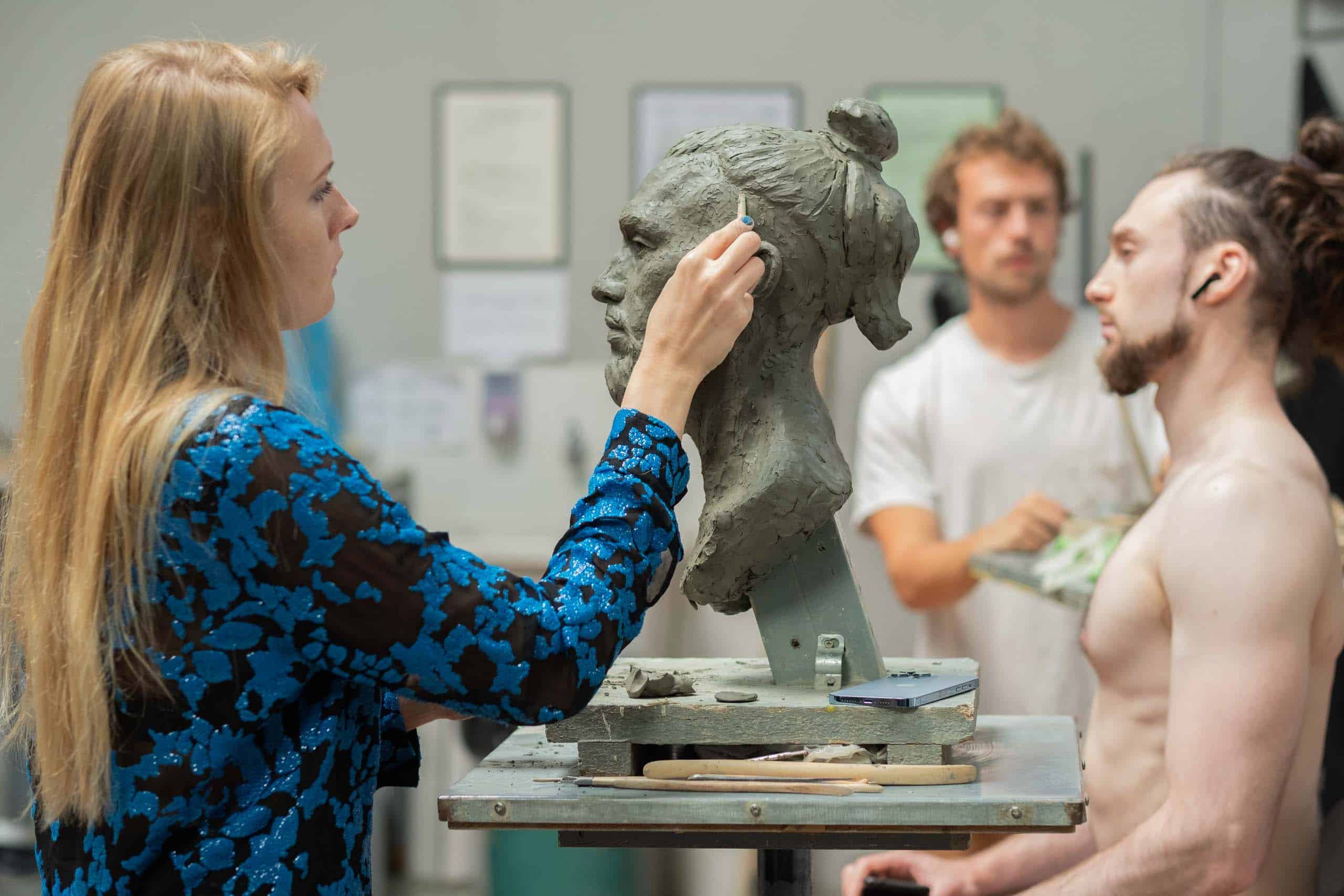
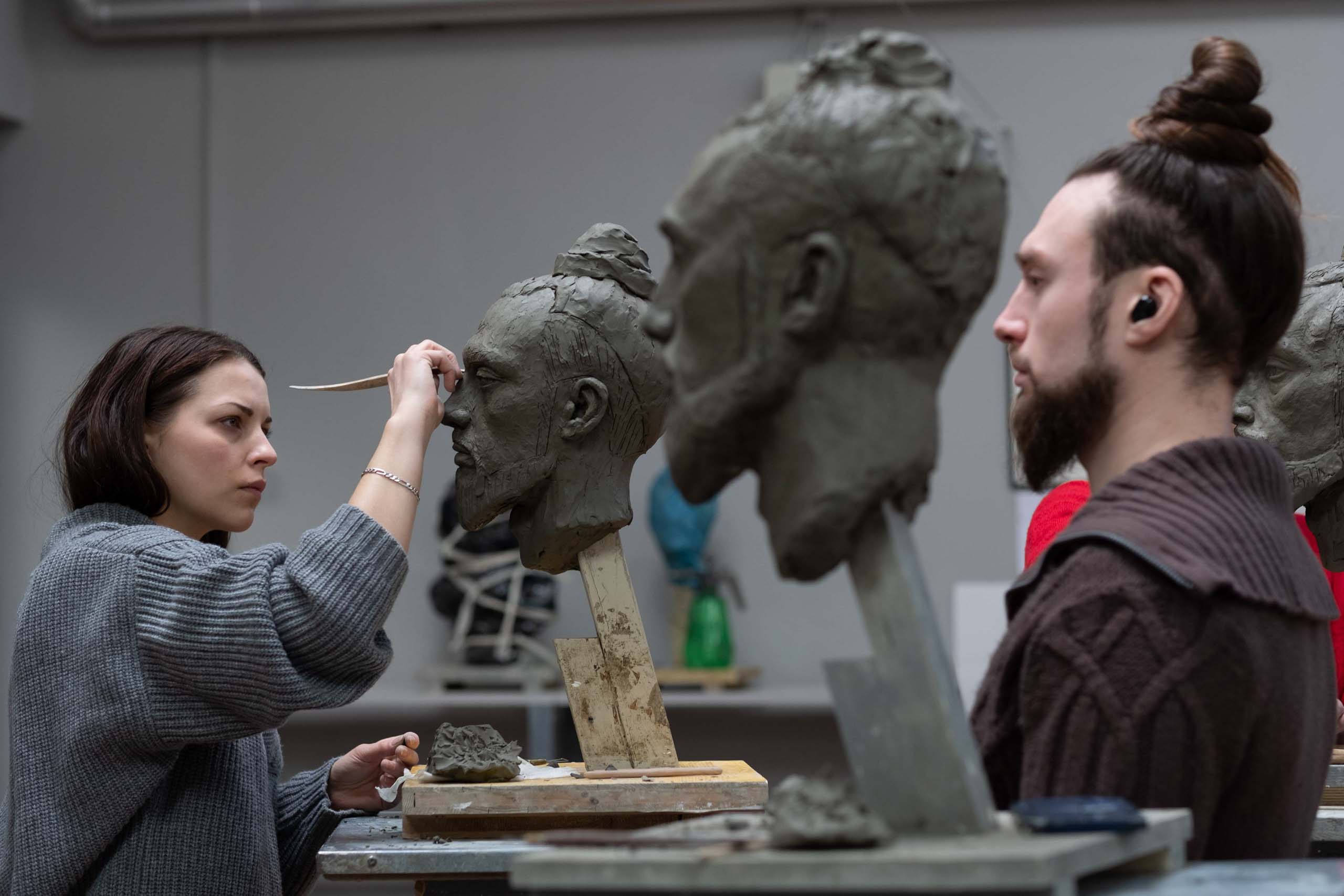
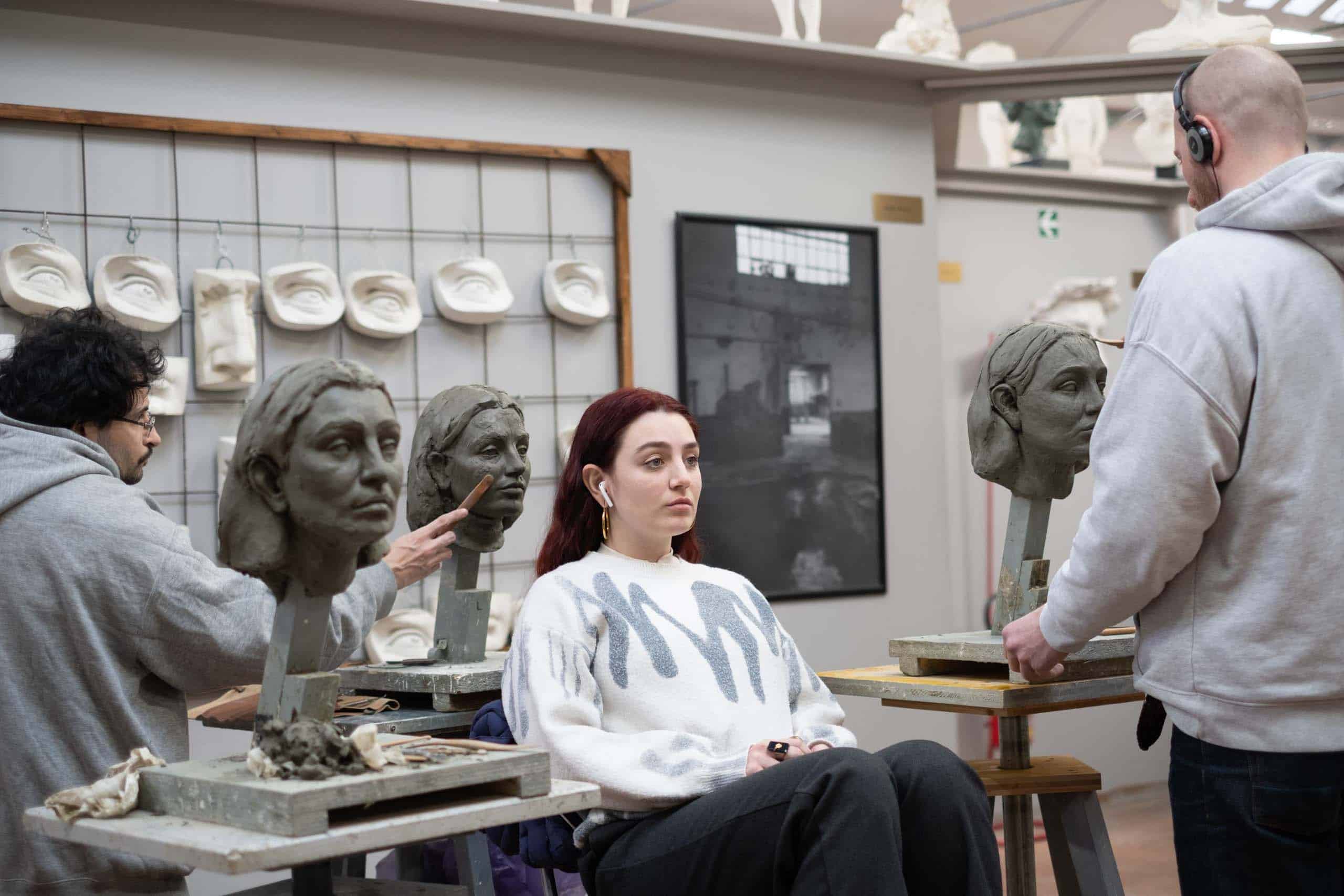
Students enrolled in their first trimester of study copy the features of Michelangelo’s David (nose, eye, ear, mouth) in clay as the first step to sculpting a portrait; this exercise teaches the student to clarify and organize his observations before setting to work; students progress to the copy of a human skull, and then sculpt their first portrait from a model. During the first trimester, when students work from live models, whether portrait or full figure, they start with a series of short poses lasting 6-8 hours if working from a portrait model, and 15 hours if working from a figure model.
Sculpture Drawing
1st year | 22.5 credits
When students are able to achieve an accurate rendering in 2 dimensions, they can apply this knowledge to the more complex task of making sculpture. Drawing is considered a fundamental skill for sculptors; when students are able to achieve an accurate rendering in 2 dimensions, they can apply this knowledge to the more complex task of observing and rendering a sculpture with its multiple viewpoints. Therefore, the Sculpture Program is broken down into lessons in sculpture and lessons in drawing (although third-year students may opt not to continue drawing during their final trimester). Students will spend three hours, five days a week, drawing the figure in charcoal.
Anatomy
1st year | 3 credits
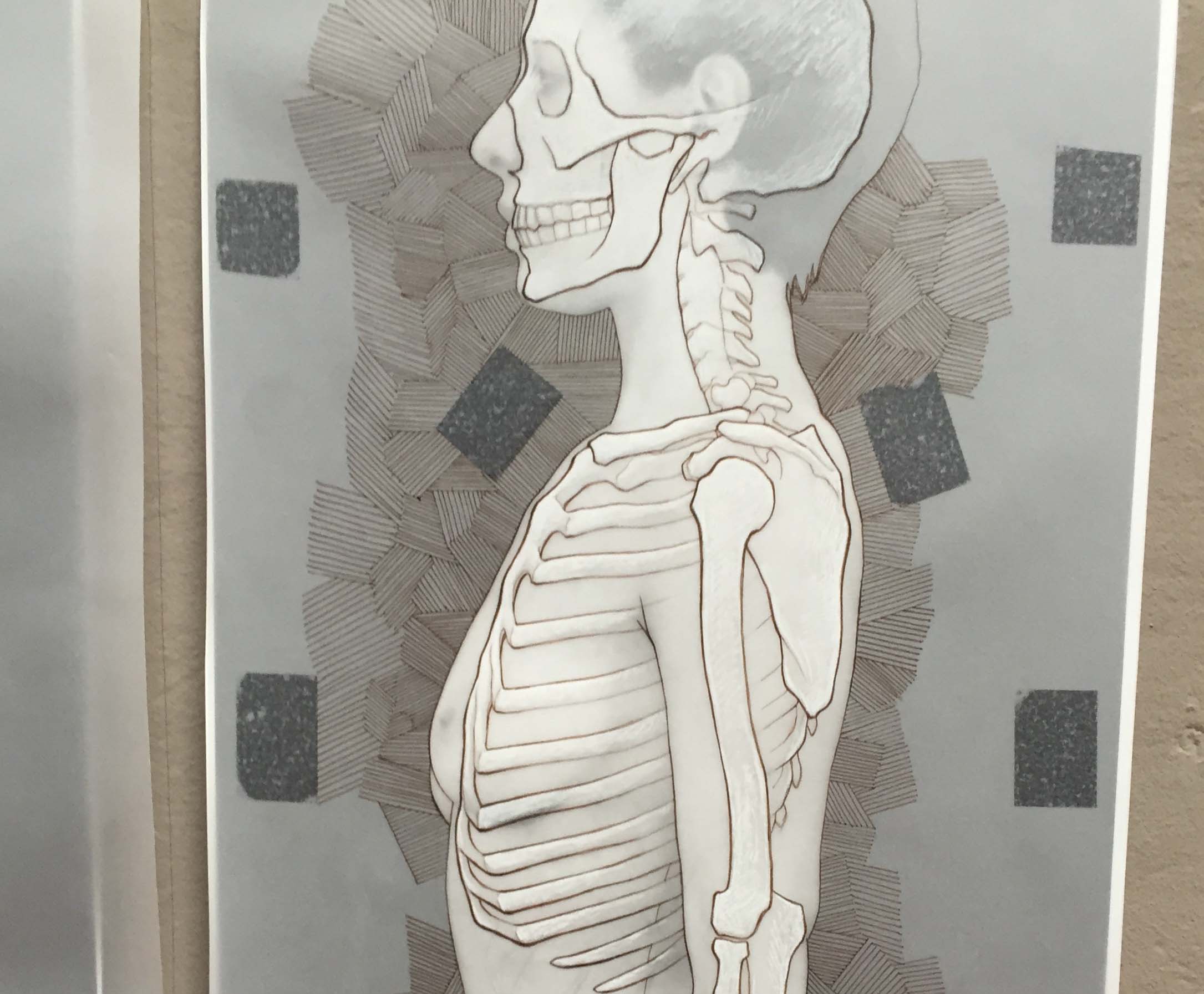
Weekly lectures begin with a discussion of the skeleton and myology, the study of the muscles, and then move to drawing exercises with the model. “The Living Form” is a phrase taken from the 19th-century anatomist, Dr. Paul Richer, in his classic text, “Artistic Anatomy”. It describes our goal as draftsmen, painters, and sculptors who study anatomy in order to see the shape and structure of the human form as it exists in life, as opposed to the altered and fragmented forms of the cadaver, or the static nature of charts and diagrams.
2nd year
Intermediate Sculpture
“There is no problem nor solution that is not a drawing investigation. Meaning, in short, stepping back from your work and making objective decisions about heights, widths, relative angles, contour, gesture, structure, proportion, spacial relationships, visual impression, etc. Even the ever so illusive volume and topography of form is ultimately discovered through drawing. A successful sculpture is a successful drawing, albeit in space, in clay, and in three dimensions.” – Mitch Shea, Director, Sculpture Program
Intermediate Sculpture
2nd year | 22.5 credits
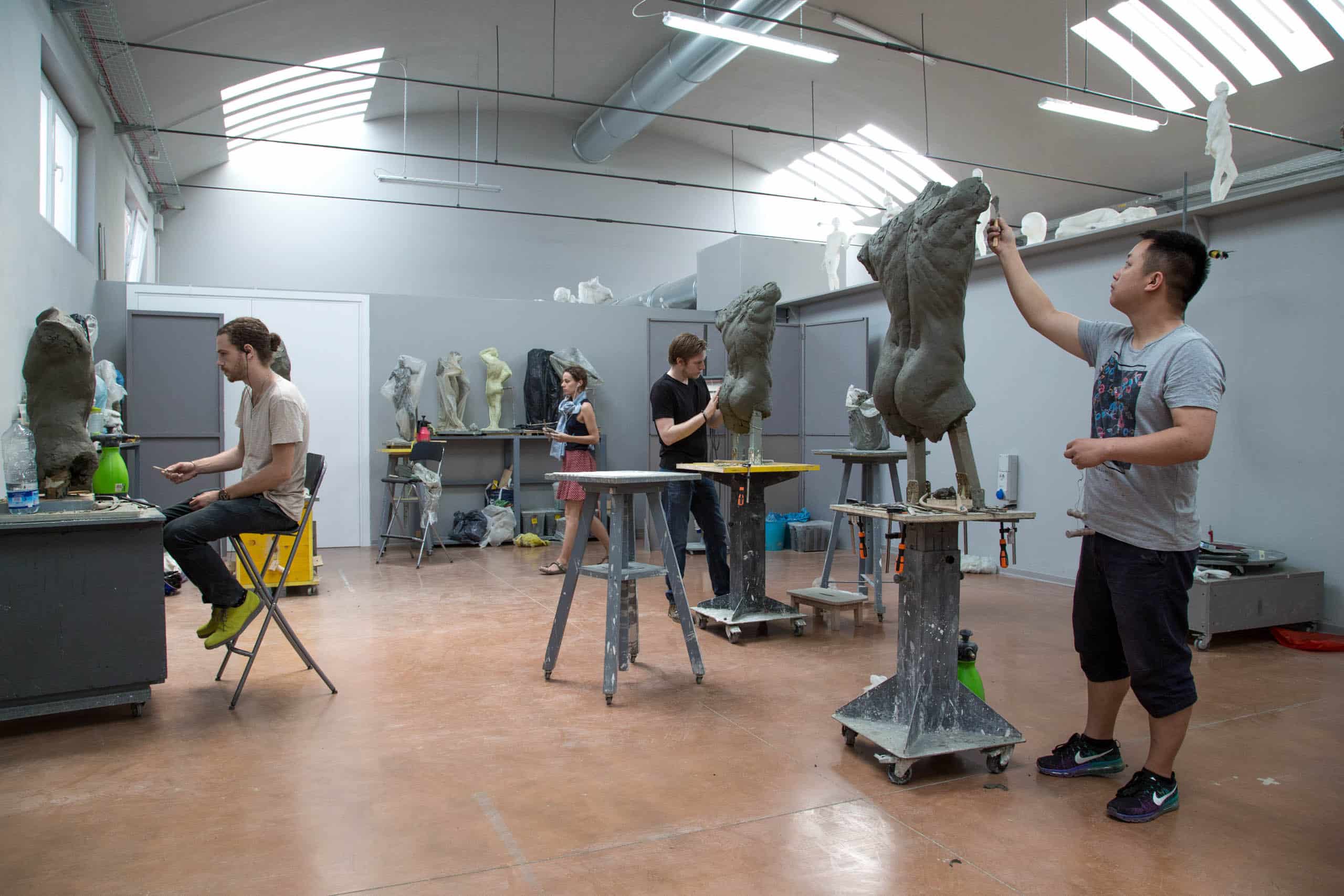
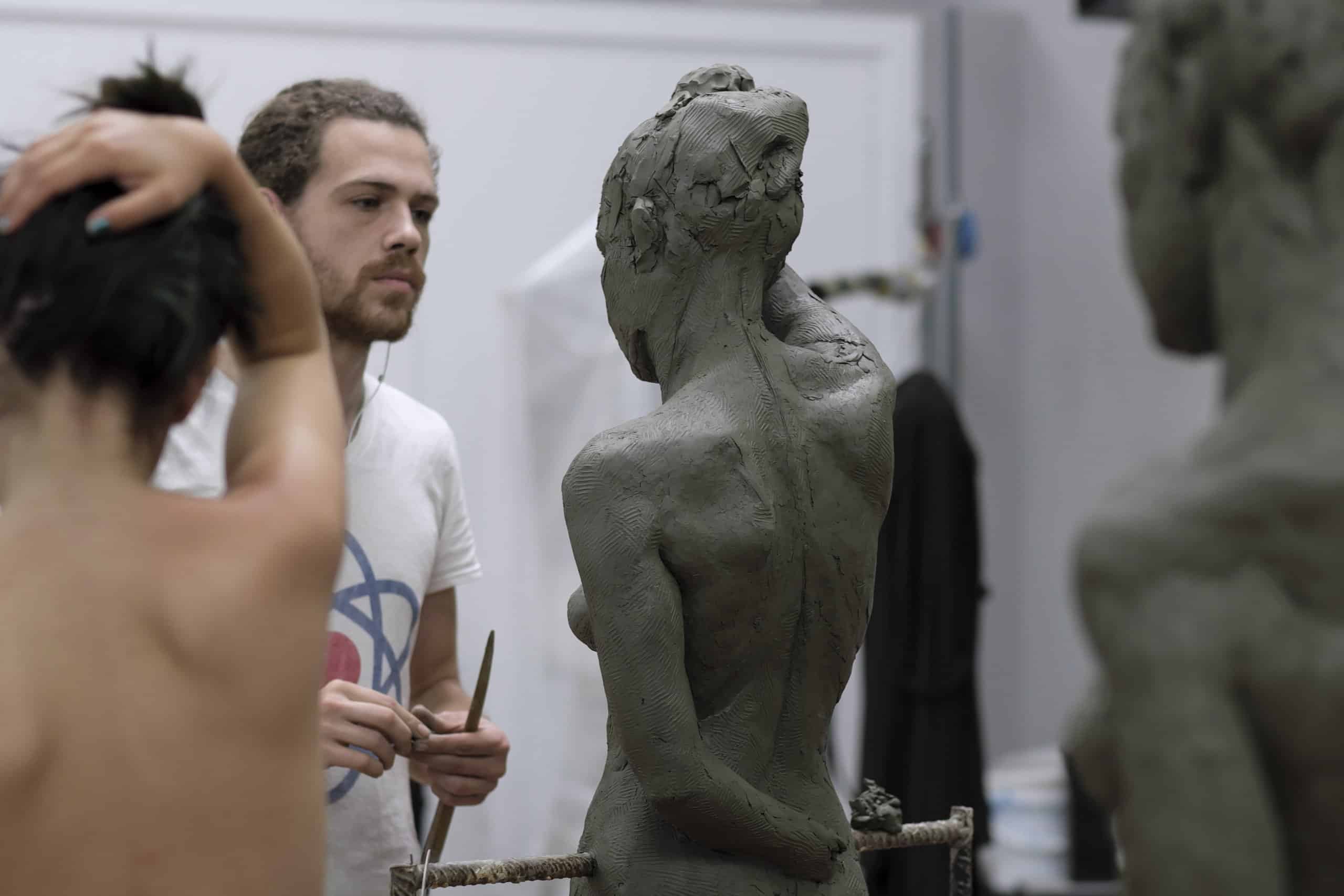
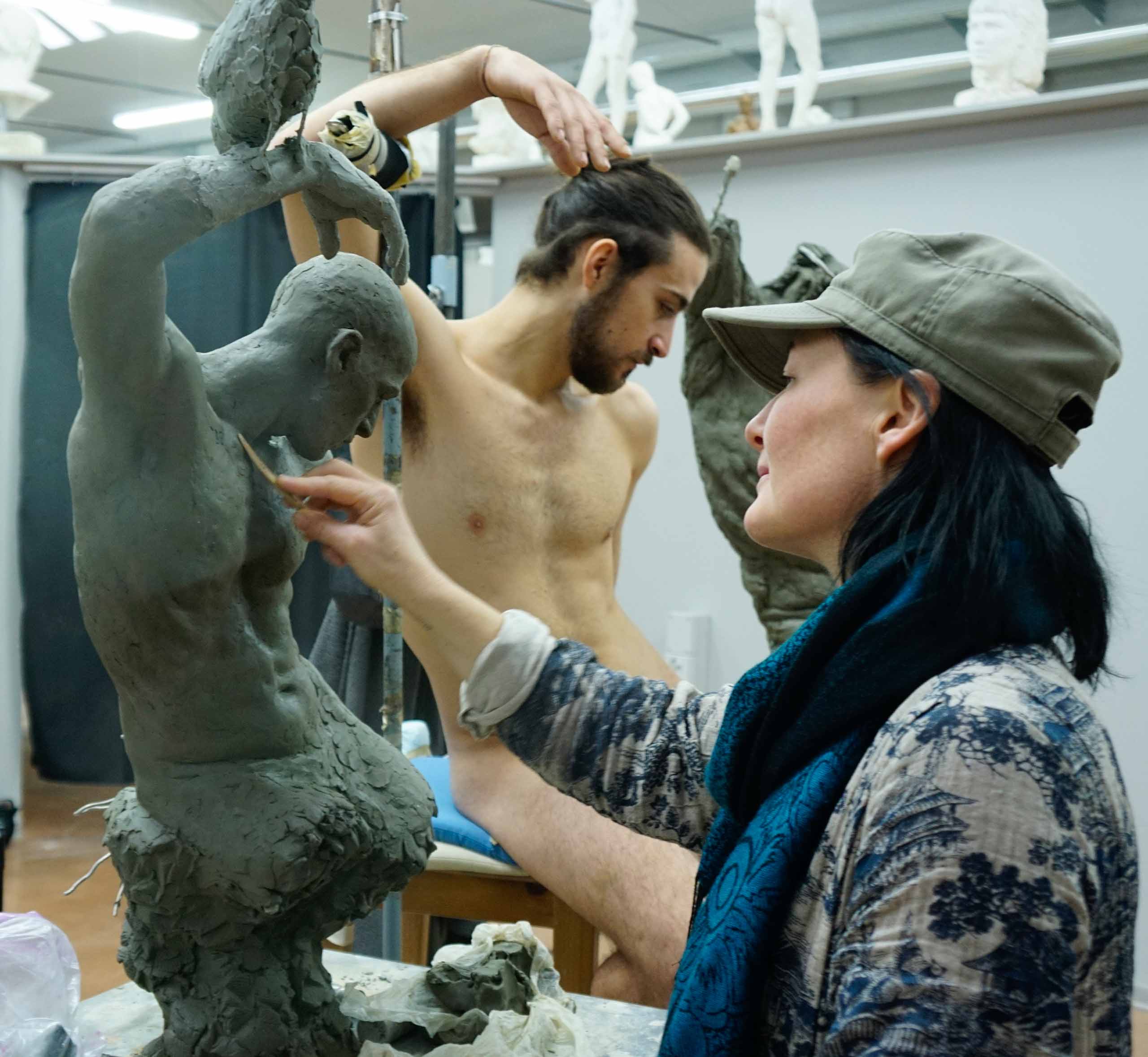
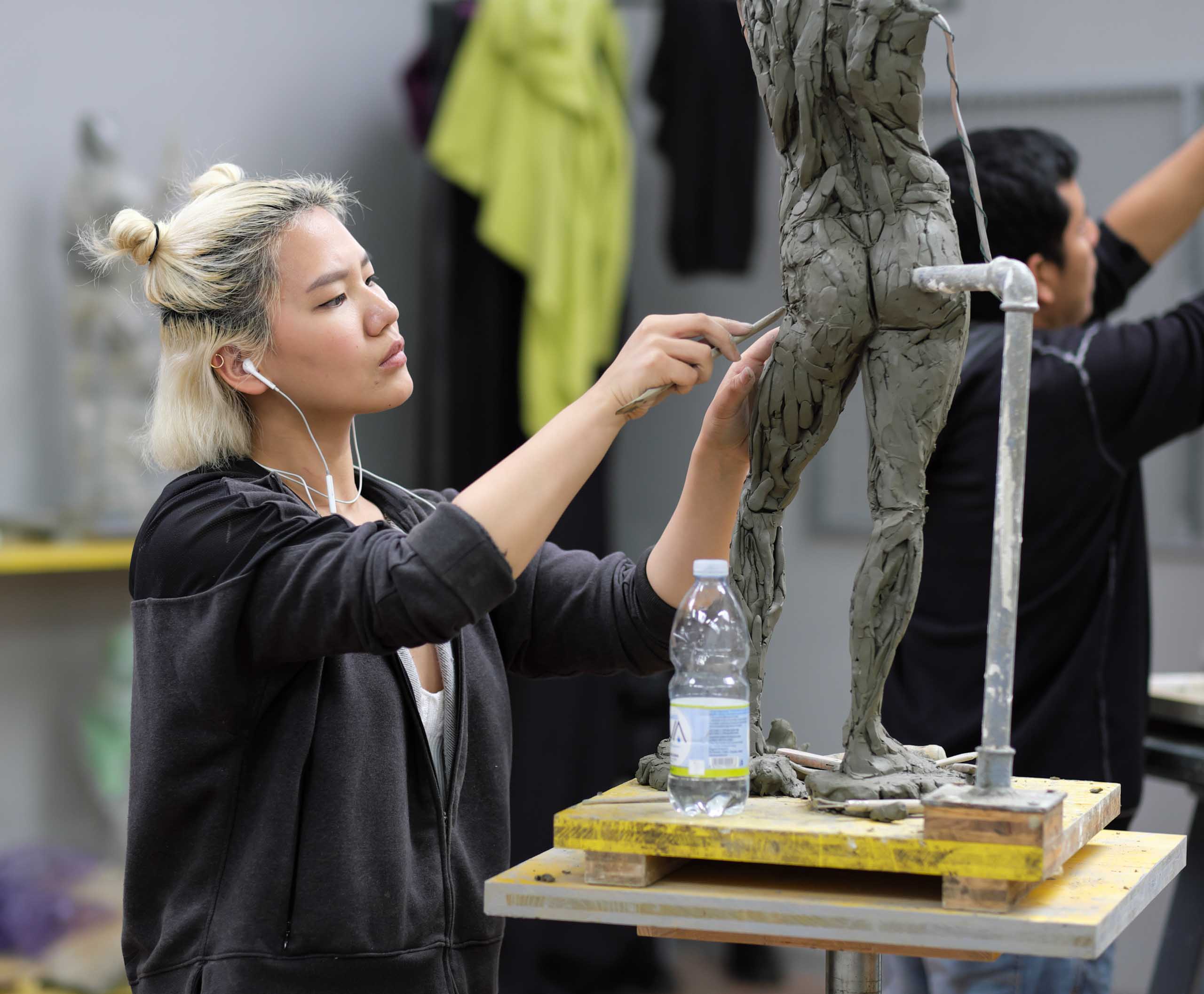
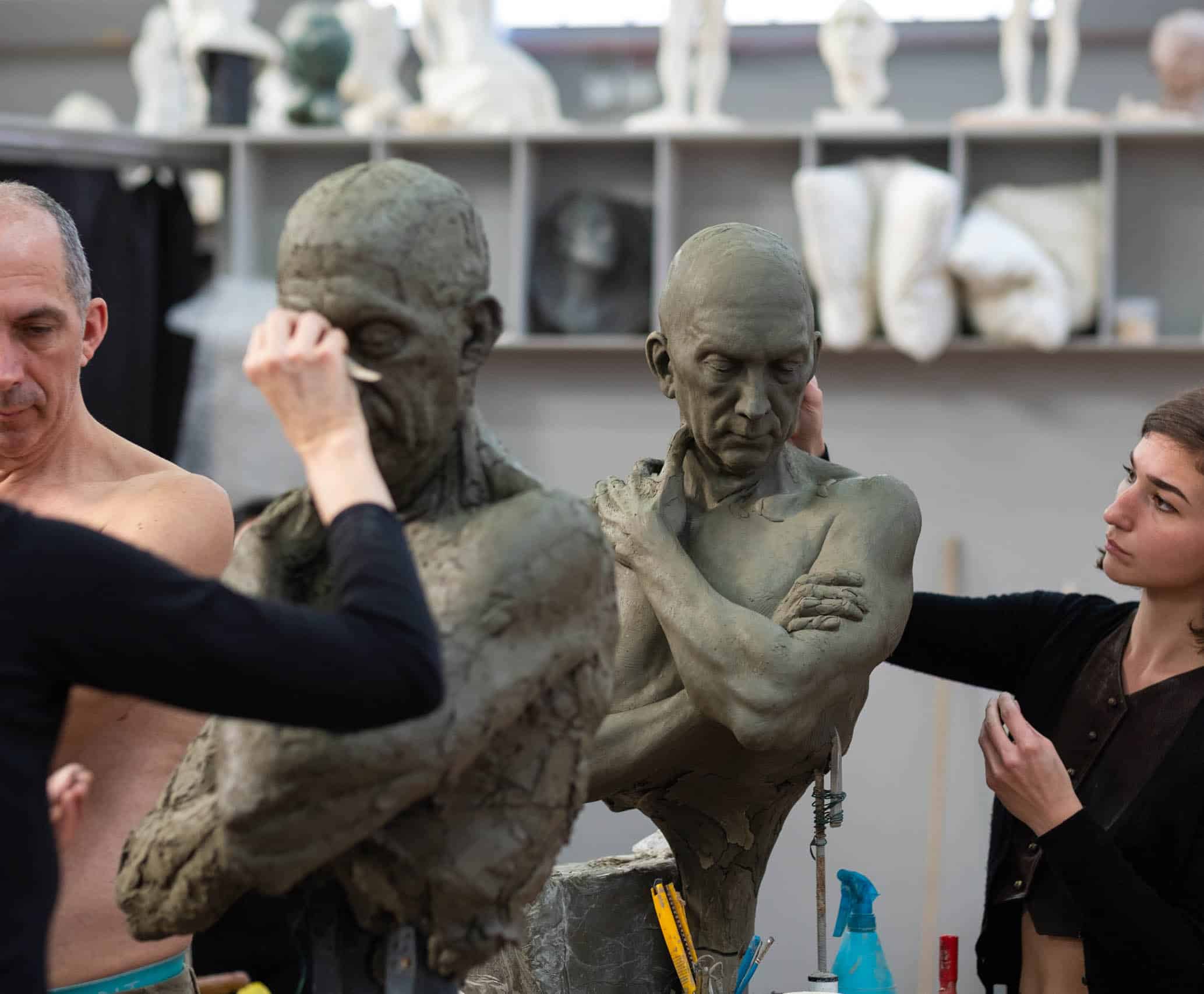
During the intermediate curriculum, students confront modeling form by working 1/2 life-size during the first trimester, and life-size for the remainder of the year. The Intermediate Sculpture exercises are undertaken by students who have produced sculptures that successfully show how the human figure’s three-dimensional linear qualities relate to internal structure. During the intermediate curriculum, students confront modeling form by working 1/2 life-size during the first trimester, and life-size for the remainder of the year. The student sculpts a series of torsos, starting with a fleshy model whose forms are soft and less clearly defined; they end with a model selected with apparent bony structure that overrides organic form and presents complexities not visible in the softer figure.
Sculpture Drawing
2nd year | 22.5 credits
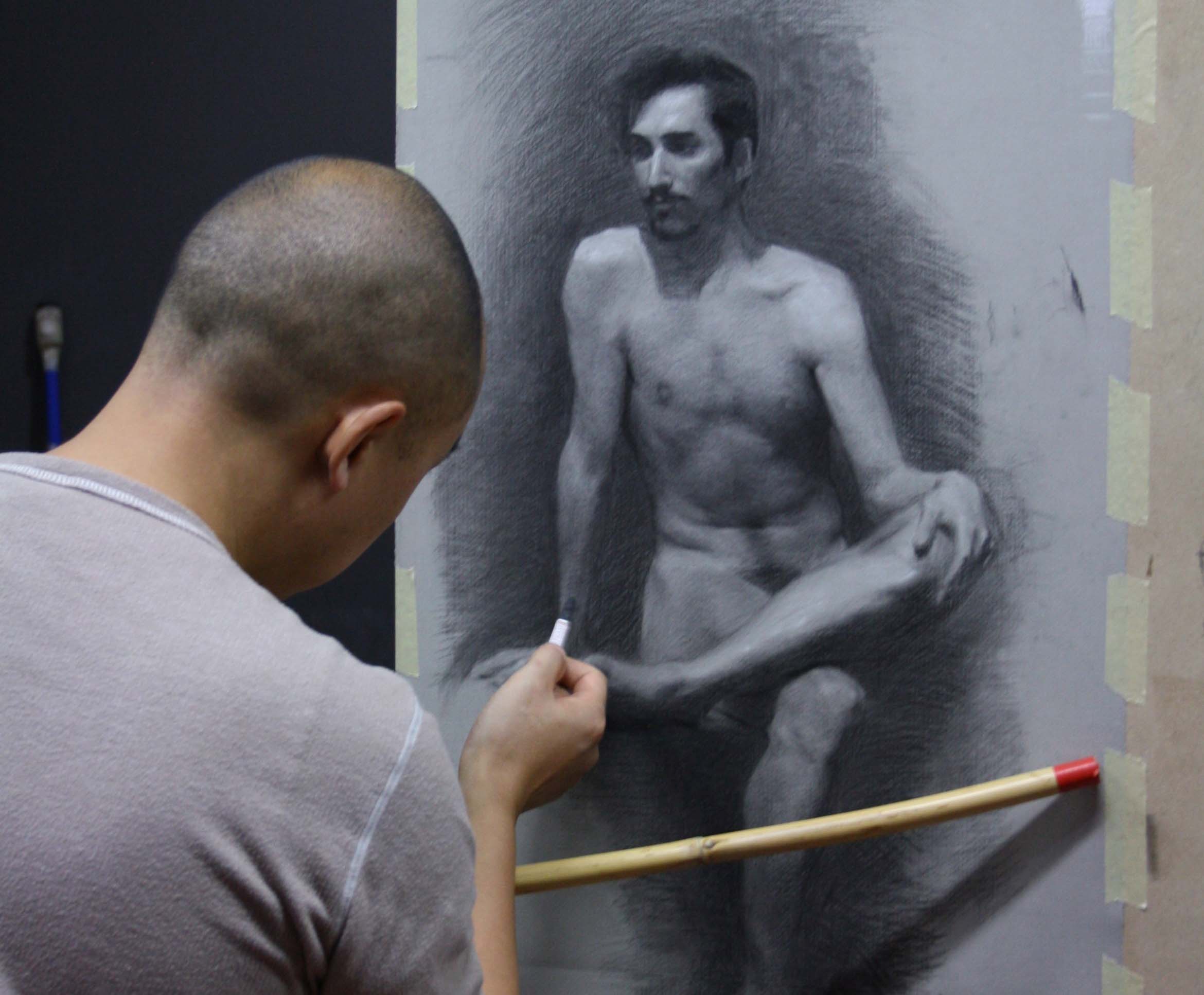
When students are able to achieve an accurate rendering in 2 dimensions they can apply this knowledge to the more complex task of making sculpture. Drawing is considered a fundamental skill for sculptors; when students are able to achieve an accurate rendering in 2 dimensions they can apply this knowledge to the more complex task of observing and rendering a sculpture with its multiple viewpoints. Therefore, the Sculpture Program is broken down into lessons in sculpture and lessons in drawing (although third year students may opt not to continue the drawing during their final trimester.) Students will spend three hours five days a week drawing the figure in charcoal.

3rd year
Advanced Sculpture
“Working directly from life poses unique challenges to the artist. The natural world cannot be copied – it must be interpreted. In the absence of an intermediary, like photography, to assist in the translation of the subject, the artist is guided only by his or her individual exploration of the subject to create a uniquely personal representation of reality.” – Unknown author (overheard at FAA)
Advanced Sculpture
3rd year | 22.5 credits
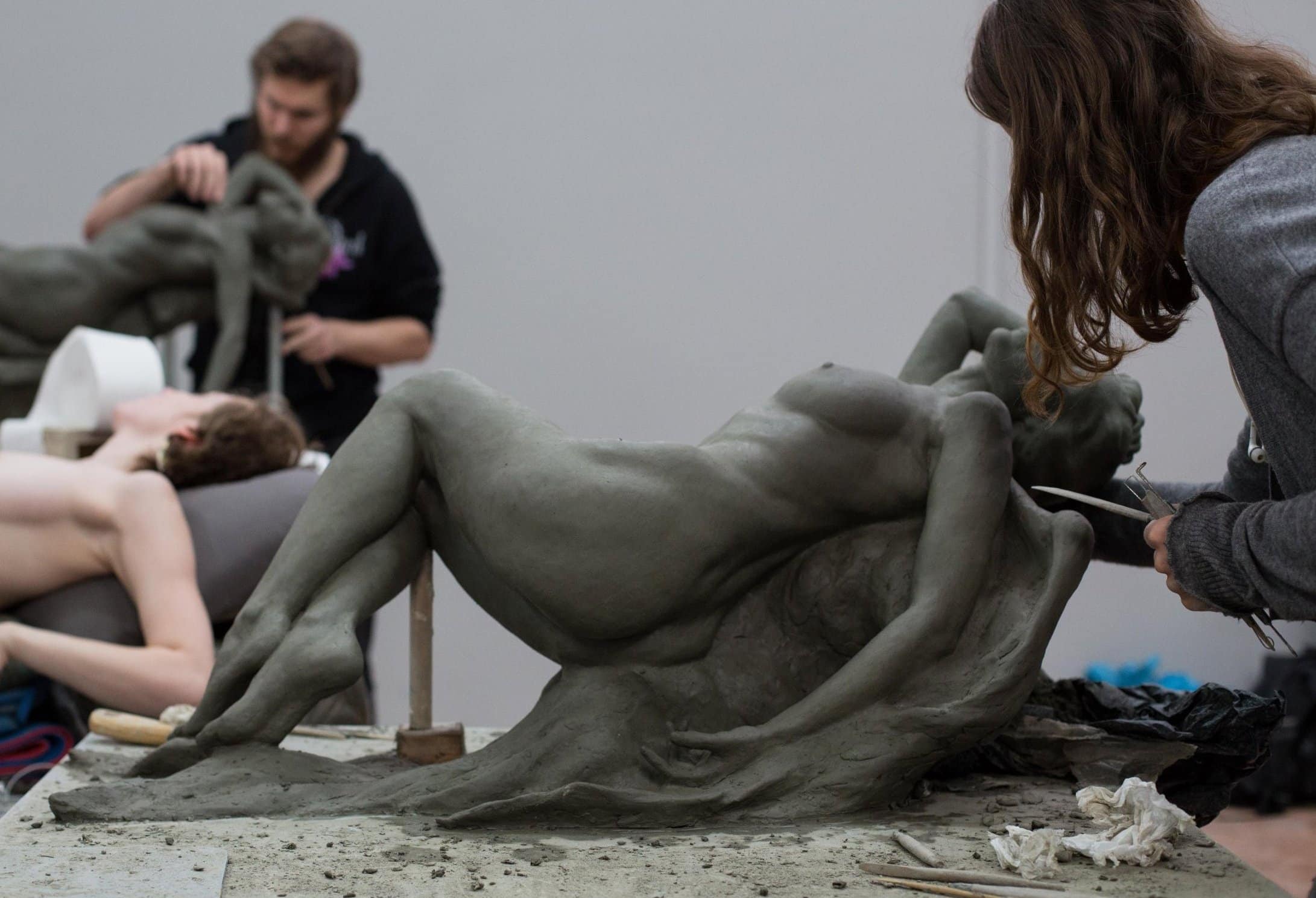
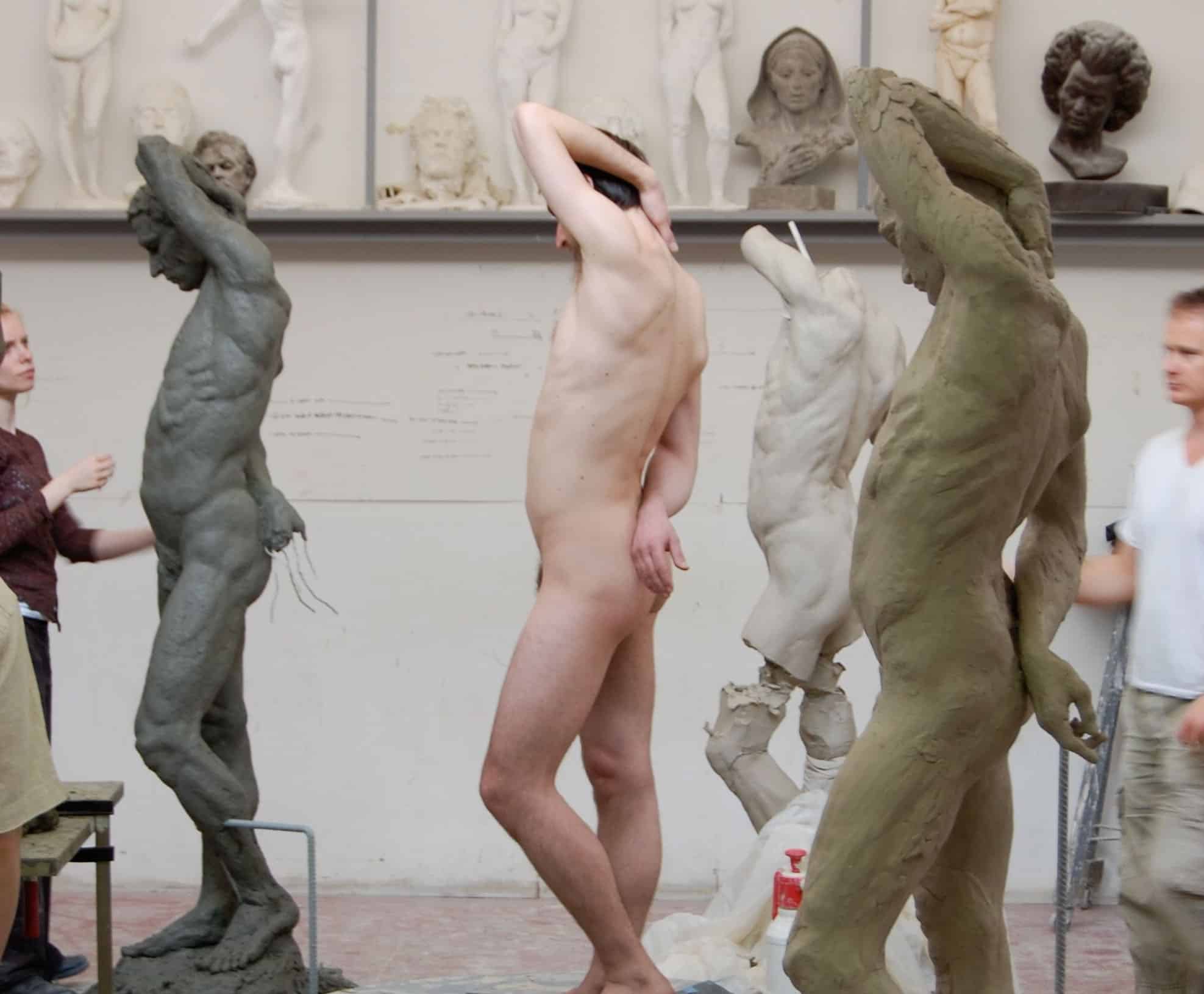
The student’s observational skills are challenged to understand and use internal structures that visually disappear. In the final, third year of the program, students are challenged by complex poses and scales not seen in the first two years. The first trimester is dedicated to a 3⁄4 life-size reclining figure set up with foreshortenings that make it impossible to observe the figure as a whole. The student’s observational skills are challenged in a variety of ways: how to understand and use internal structures that visually disappear, how to make comparative measurements of a body that is now foreshortened.
Sculpture Drawing
3rd year | 22.5 credits
When students are able to achieve an accurate rendering in 2 dimensions they can apply this knowledge to the more complex task of making sculpture. Drawing is considered a fundamental skill for sculptors; when students are able to achieve an accurate rendering in 2 dimensions they can apply this knowledge to the more complex task of observing and rendering a sculpture with its multiple viewpoints. Therefore, the Sculpture Program is broken down into lessons in sculpture and lessons in drawing (although third year students may opt not to continue the drawing during their final trimester.)