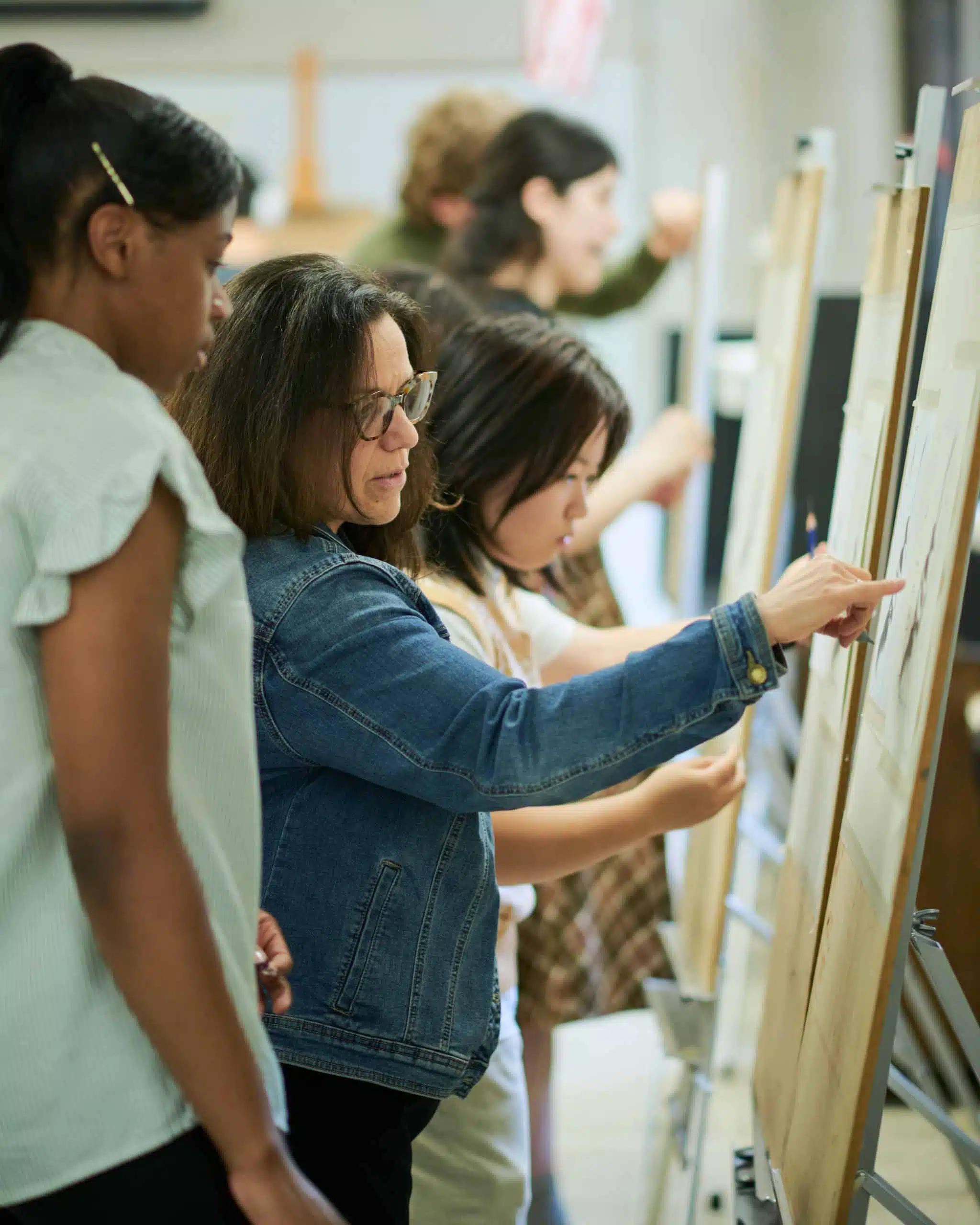
Nina DiRienzo teaching in her classroom in New Jersey
Teaching is not simply about technique; it’s about continuity. It is a way to carry forward a living tradition that reaches back through centuries of artistic practice. The Florence Academy of Art has long been recognised for its commitment to preserving and revitalizing traditional methods in drawing, painting, and sculpture. Its MA course extends that mission, equipping artists and educators with the tools to not only refine their own craft, but also to teach it.
Nina DiRienzo is a recent graduate of the FAA’s MA course, and in her classroom today, the methods of the atelier — once the foundation of artistic training — live on, adapted for a new generation.
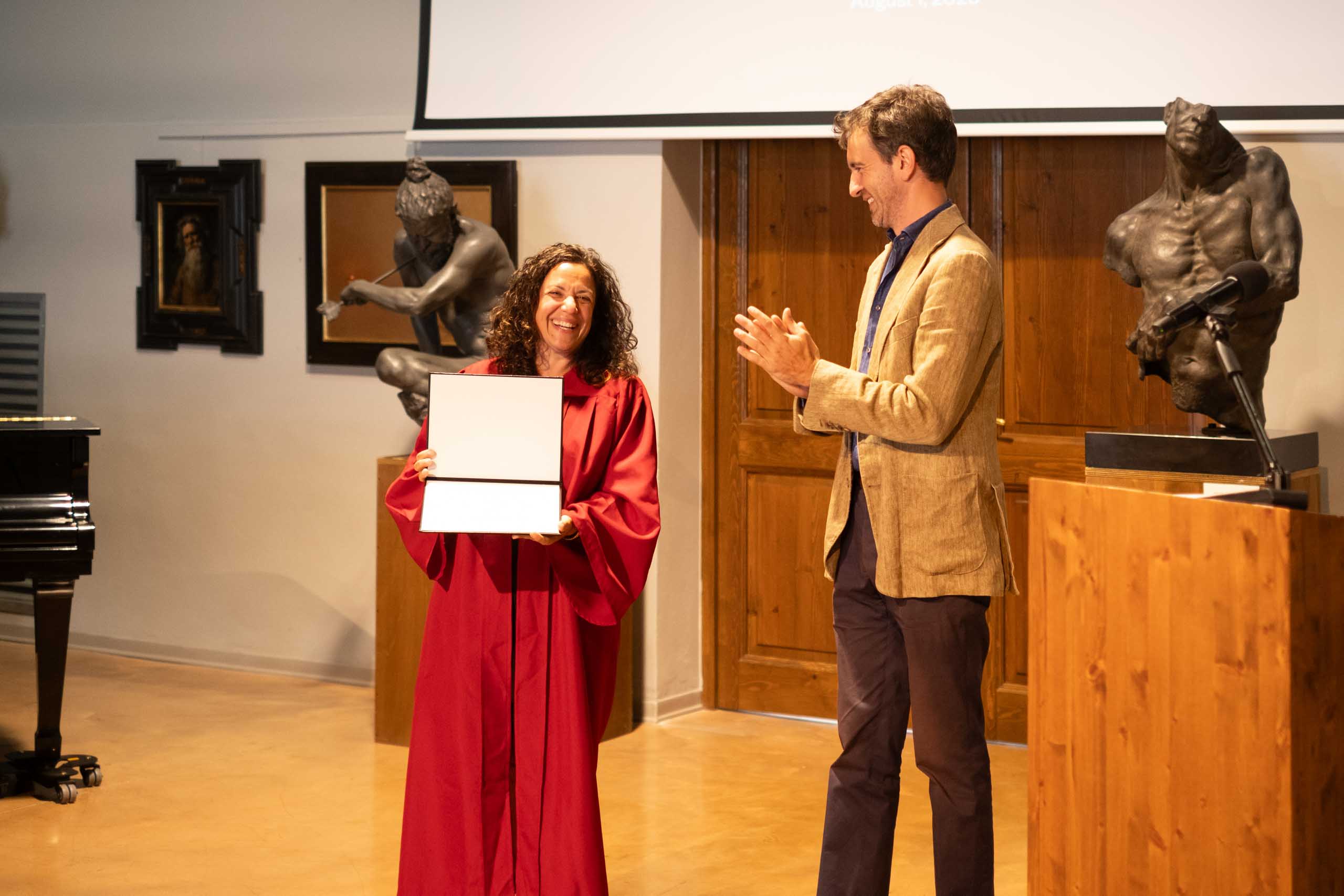
Nina DiRienzo receiving her diploma at The Florence Academy of Art after completing her studies in the MA Program
“I have been very fortunate to have had wonderfully skilled teachers throughout my education, but the FAA’s rigorous process and its connection to the past were what drew me in. They taught the process and gave me the tools to find solutions to problems that were left unanswered in the past. Traditional skills were taught to be a strength, not a limitation. This balance allowed me to take the FAA concepts back to my classroom and demonstrate how the traditional approach can benefit contemporary students.”
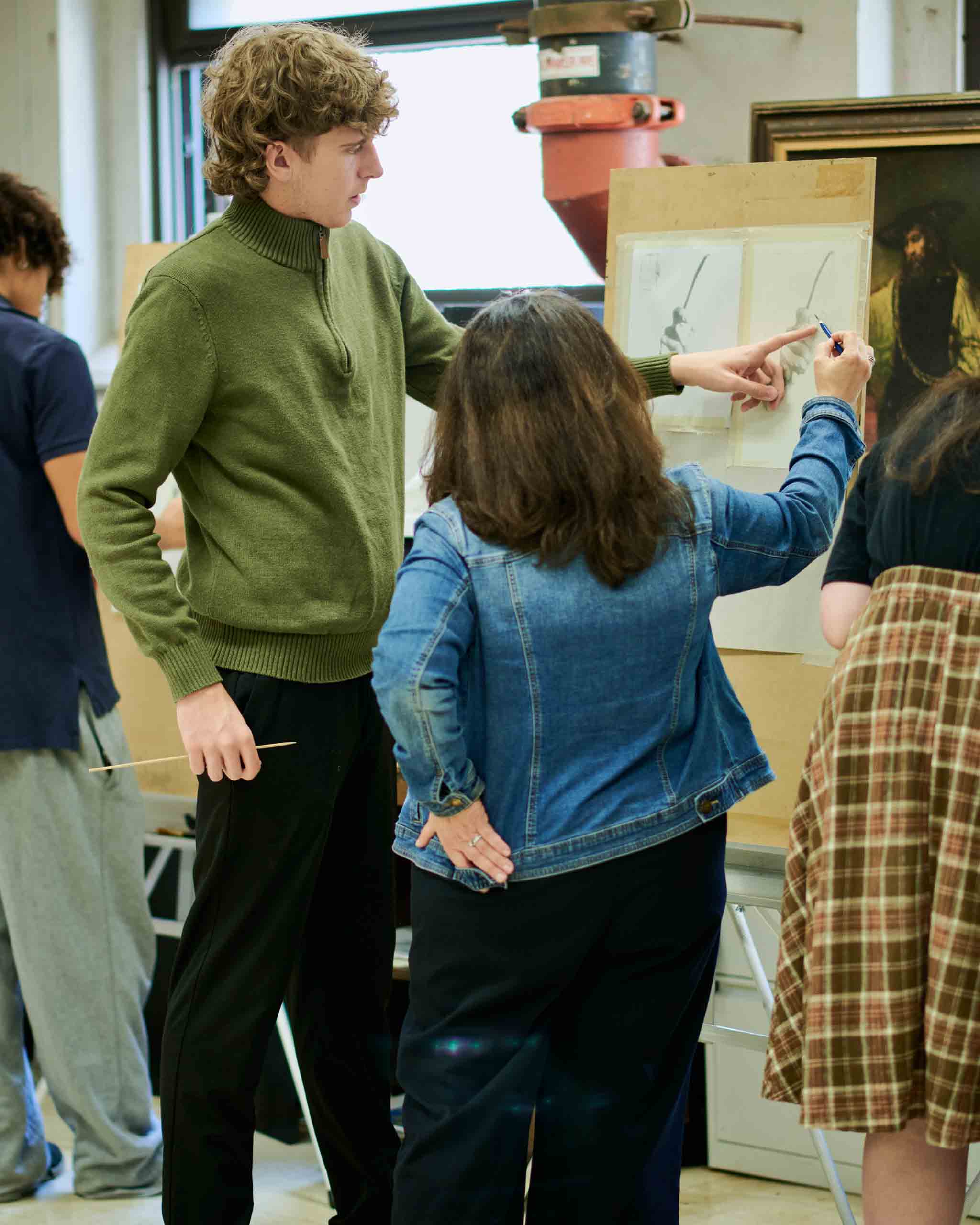
Nina DiRienzo teaching in her classroom in New Jersey
For Nina, this training and connection to traditions and methods of past artists have shaped the way she teaches and sees her role within a much larger continuum of artists and educators.
“Passing down techniques and values that I believe are the skills they need to be successful in their own journey has been extremely rewarding to me both as an artist and a teacher. Every teacher who is working at the FAA is passing down information they have gained through their own experiences with artists they studied under. You can be at your easel struggling through a moment when your teacher will come over and provide you with insight passed down by one of their teachers, who gained that knowledge from their teacher, and so on. This sense of tradition gives me confidence in my own teaching because I know I am passing down information that will help make my students successful.”
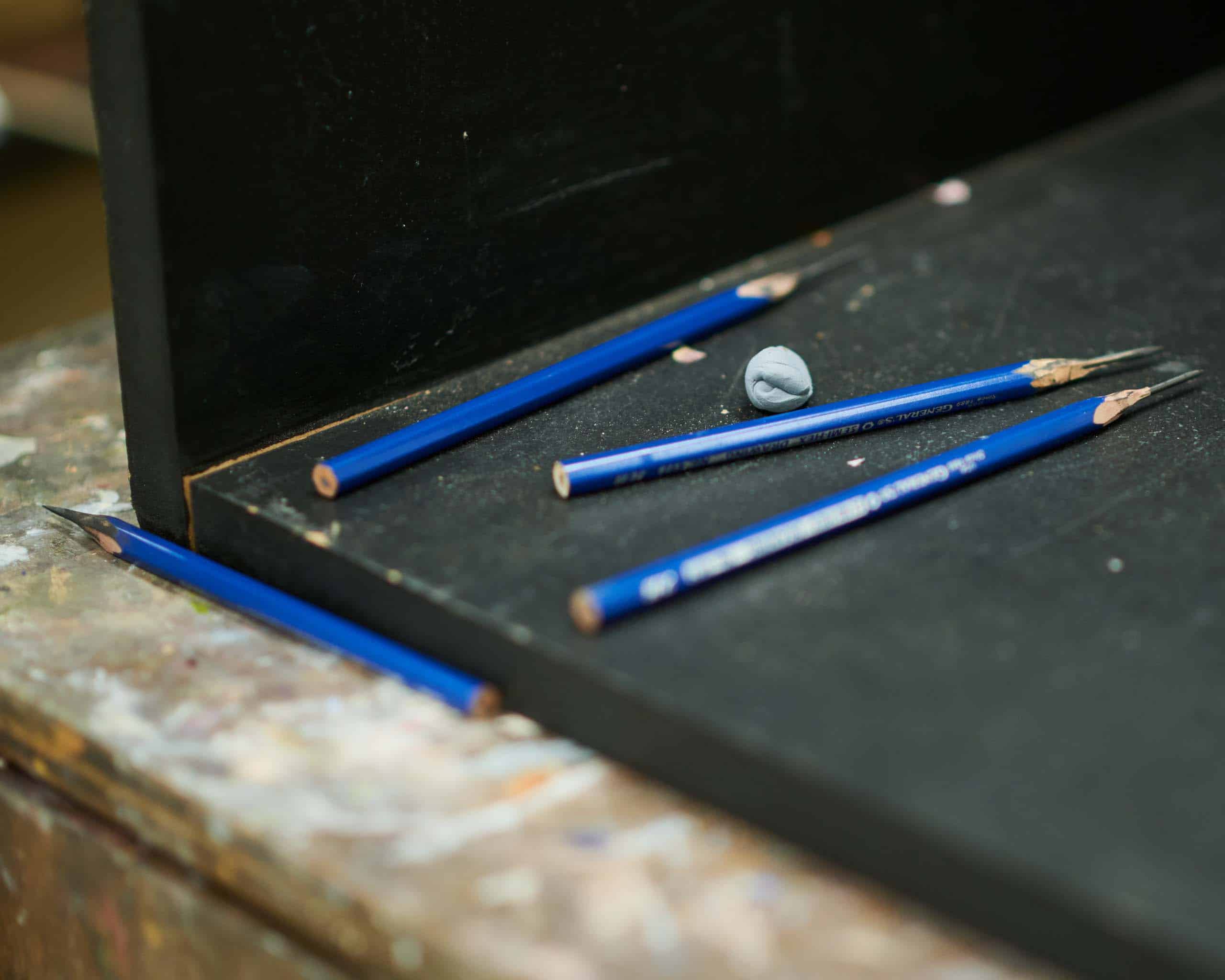
The FAA’s MA program seeks to enhance the classroom experience and build the confidence of educators and their students. It is the start of a renewed conversation with art, allowing students to develop new skills and gain a deeper understanding of their own potential.
“After completing my master’s with the FAA, I was so excited to return to the classroom and share all of this knowledge with my students. It was amazing to watch the students complete a Bargue plate, to feel challenged and to be so proud of what they learned and accomplished. After that, I was convinced I had to incorporate these methods to build their skills so they could achieve what they were seeking in their education.
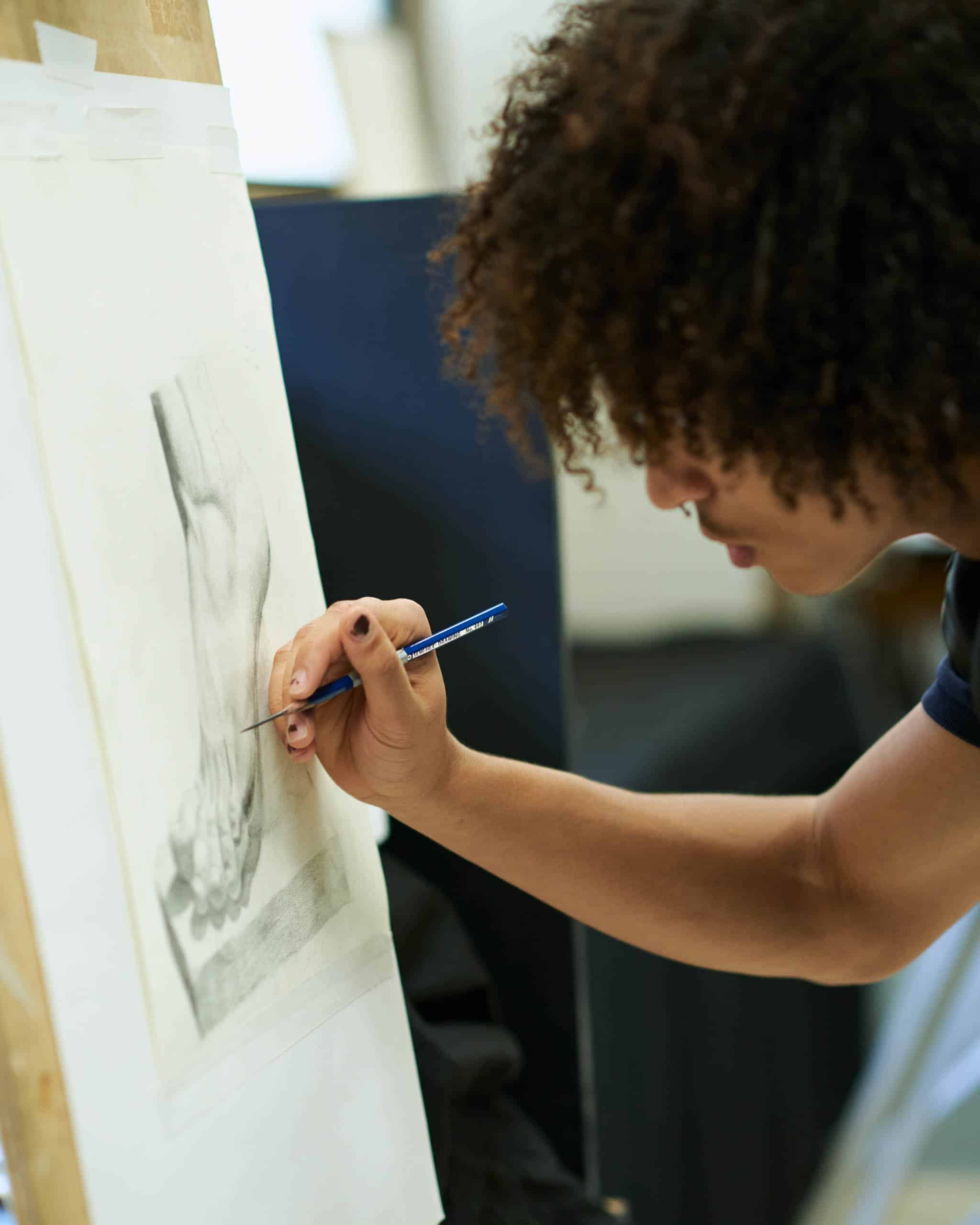
A student at work copying a Bargue plate in Nina’s classroom in New Jersey
“My students have demonstrated remarkable growth since being exposed to this teaching method. I’m very proud that I have seen the FAA methodology impact my students’ success in and out of the classroom. Watching each student grow at their own pace, overcoming challenges along the way, as they proceed through the particular exercise, makes each student’s experience unique.”
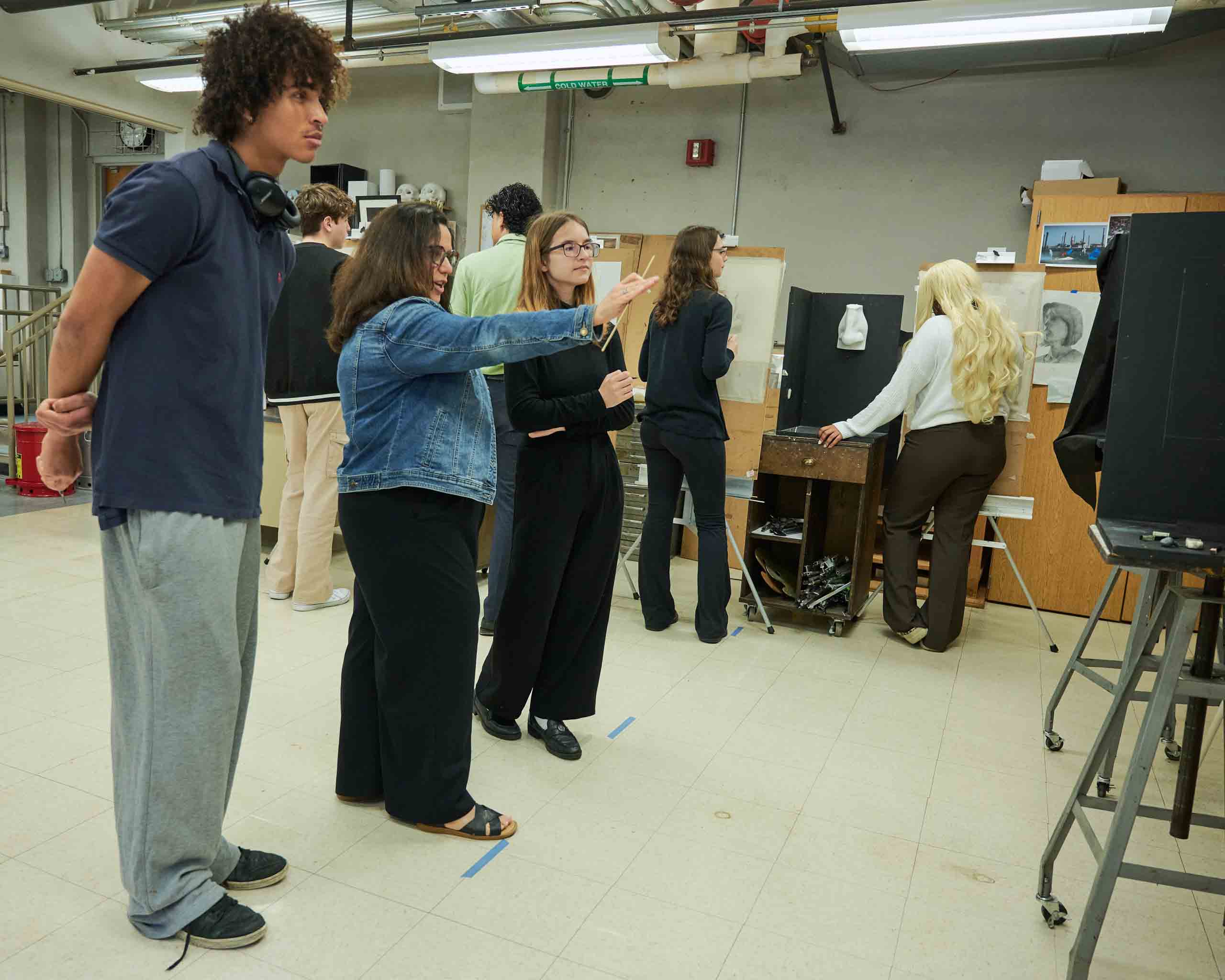
Nina DiRienzo teaching in her classroom in New Jersey
Today, the integration of traditional methods of drawing and painting in a contemporary classroom is quite rare. But with the modern world hurtling forward toward automation and artificial intelligence, perhaps there is yet a place for art that endures, built upon the foundation of skill, good taste, and the appreciation of history and nature.
“Students are so connected to technology in all aspects of their lives. They expect immediate results and answers to everything. I knew it was going to be a little rough at the beginning to have them focus on technique, so I slowly introduced it. When students started to see what they could accomplish, that was when things started to change. Just like any other subject, you need to be taught the building blocks to be successful. And I have seen students become more creative and confident because they have this strong foundation of skills.
Now, when you walk into my classroom, you will see every single student at their easel, connected to what they are observing and to their work. There is camaraderie among the students. They support and appreciate each other’s growth.”
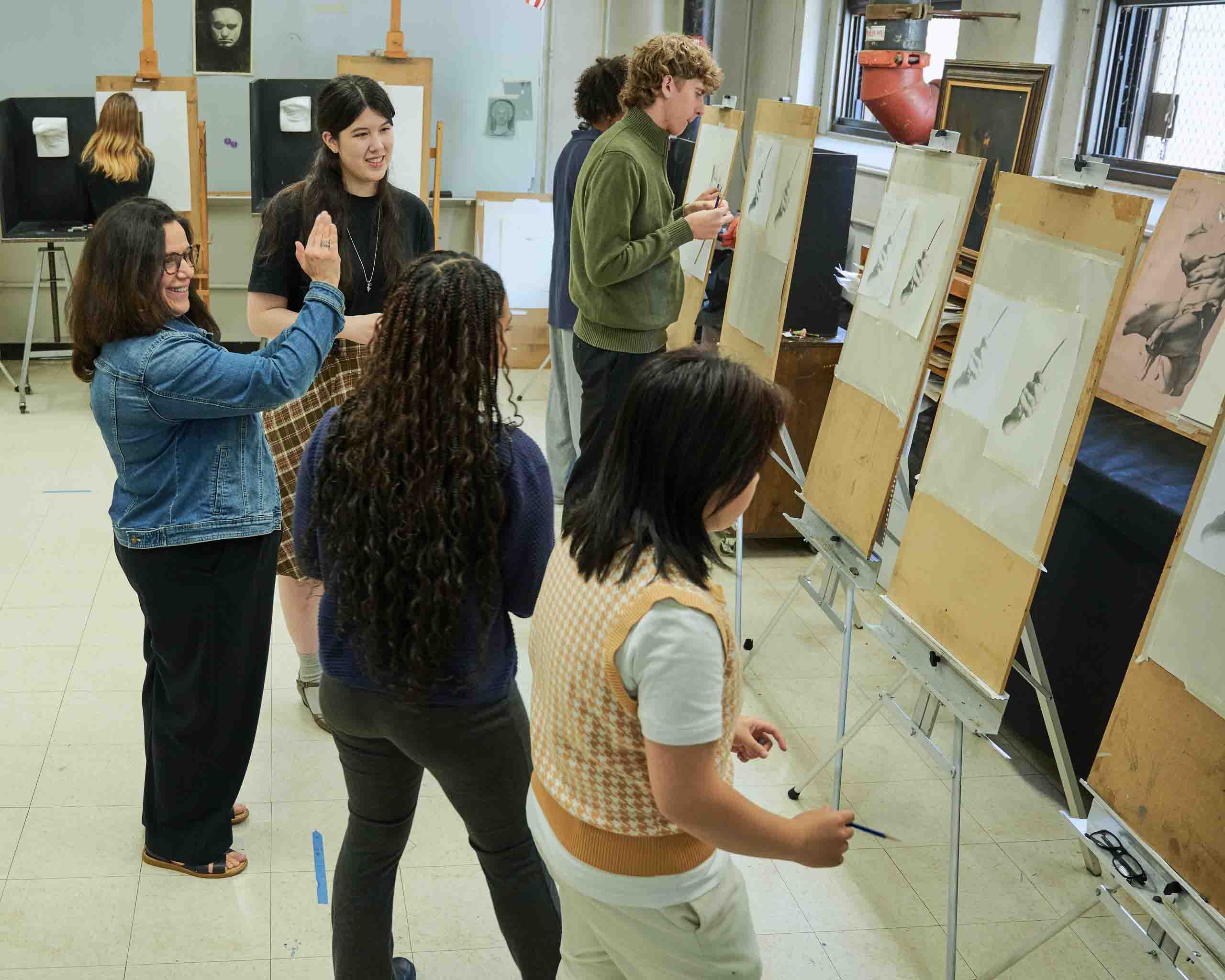
Nina’s Classroom in New Jersey, where students study traditional methods of drawing.
“While I believe every aspect of traditional training has value, the most important thing to pass on to the next generation is a genuine respect for the artists who came before us. Traditional training carries years and years of accumulated knowledge—kept alive because artists were passionate enough about the craft to share what they had learned. Preserving that sense of appreciation and continuity matters to me. It reminds students that they’re part of a long lineage, and that the techniques they’re learning exist today because someone cared enough to pass them forward.”
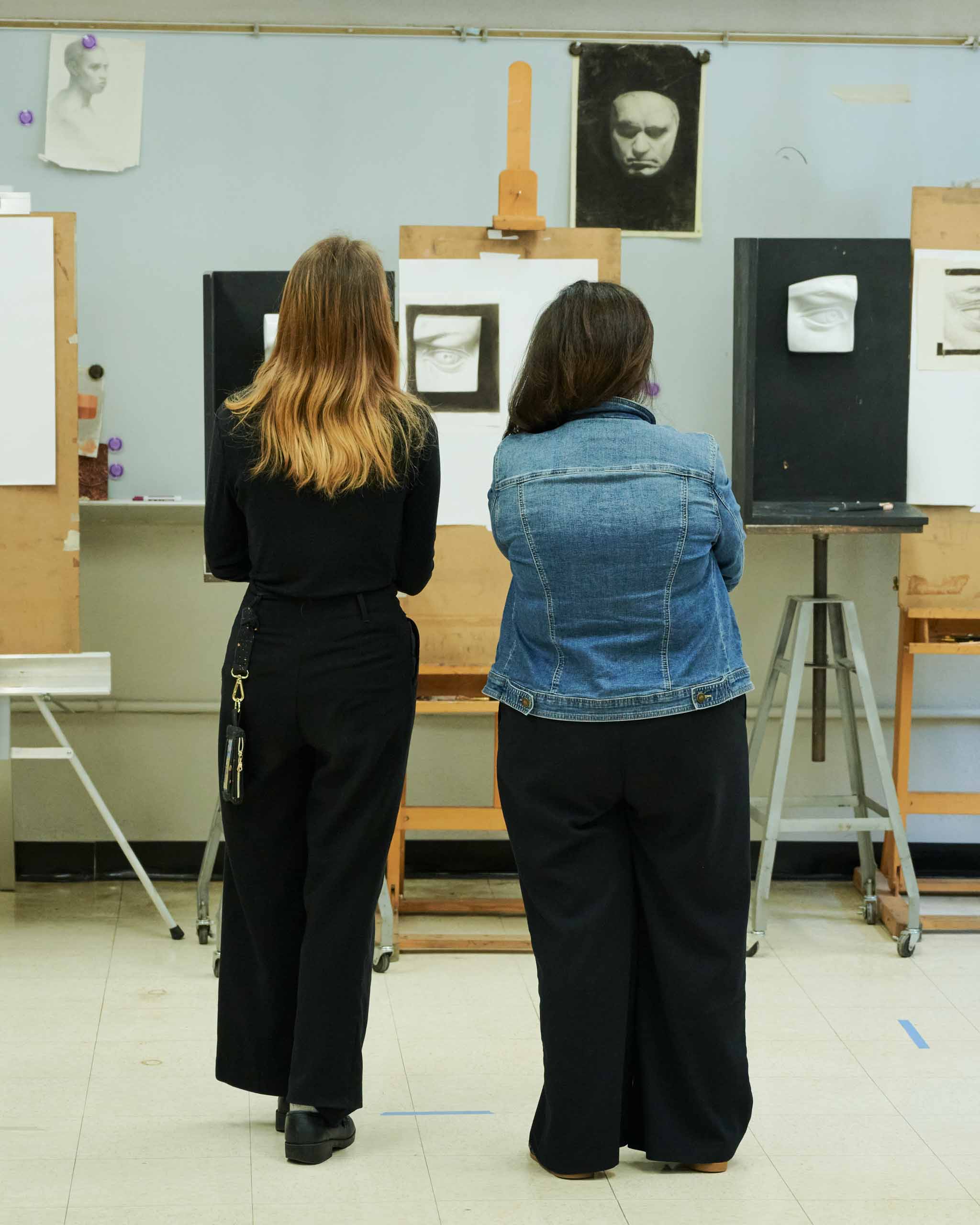
Nina DiRienzo teaching in her classroom in New Jersey
Nina’s experience speaks to the heart of what The Florence Academy of Art’s MA program strives to preserve: a living, adaptable tradition that continues to shape artists and educators in meaningful ways. In a world where creative practices evolve rapidly, she believes that traditional skills remain not only relevant but essential. “As an artist, I think we need to be able to incorporate traditional skills into the ever-changing world we live in. As teachers, we need to be there to pass on information, to give students skills and a foundation to navigate the world they know today. It changed my life. It reinvigorated my passion for teaching and my desire to be in the studio. The knowledge and the skill set I left with was without a doubt the most impactful in my own education.”
We would like to thank Nina DiRienzo for her contributions to this article and to her students at McNair Academic High School for opening their studio to us. Nina DiRienzo is a graduate of the Florence Academy of Art, where she earned her MA in Studio Arts. Prior to that, Nina attended Farleigh Dickinson University, where she was awarded her Bachelor of Arts in Studio Arts, with minors in Art History and Italian Language and Politics. As an undergraduate, Nina studied abroad in Italy at Università per Stranieri di Perugia. Nina has 25 years of experience teaching studio arts at the high school level. She currently serves on the faculty of McNair Academic High School. Nina was appointed to the alumni advisory committee of The Florence Academy in 2024.
Photographs courtesy of Virginia Kluiters.